
Sensory processing
Sensory Overload: What It Is, What It Feels Like, and How to Cope
Sensory overload explained: what it is, what it feels like, how it shows up in autism, ADHD, anxiety and PTSD, and what helps in the moment and after.
- Expert Reviewed
- Plain Language
- Patient Focused
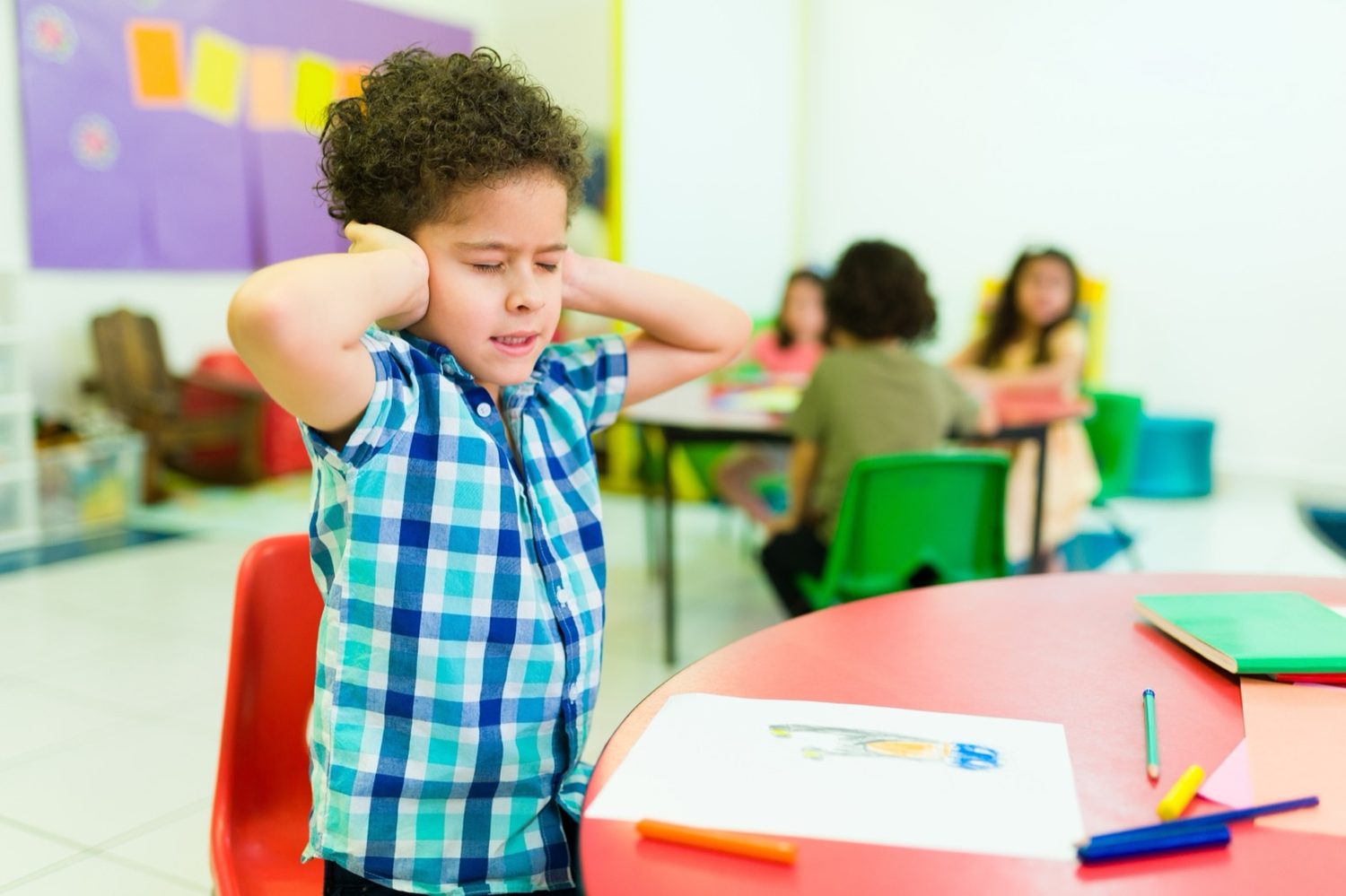
Sensory overload is being overwhelmed by sensory input: sound, light, touch, smell or movement that feels too intense to filter out. In the moment, reduce the input first, say less and give it time. Sensory over-responsivity, a strong reaction to everyday sensations, affects an estimated 15 to 20 percent of children.1,2,3
Sensory overload, sobrecarga sensorial in Spanish, is the point where everyday input stops being background and becomes too much. It is not a diagnosis. Sensory reactivity is part of how autism is defined, overload is more common in ADHD and closely tied to anxiety, and it also affects children with no diagnosis at all.3,4,5 What helps is cutting the input, waiting, and then finding what is loading the day.
Key takeaways
- Sensory overload is being overwhelmed by sensory input; sensory over-responsivity, reacting more intensely, quickly or for longer to everyday sensations, makes it more likely.1
- An estimated 15 to 20 percent of children are over-responsive; in 925 children aged 7 to 11, 16 percent were bothered by four or more everyday touch or sound sensations.3,6
- Sensory reactivity is one of four kinds of restricted, repetitive behavior in the autism criteria, but sensitivity alone does not mean autism.4,7
- Over-responsivity predicted later anxiety in toddlers and preschoolers, while anxiety did not predict later over-responsivity.8,9
- A panic attack can come with no trigger at all, while overload is tied to input; a meltdown is losing control, and a shutdown is withdrawing.2,10,11
- Earmuffs helped autistic children in a small study, but routine hearing protection where sound levels are safe can make hearing more sensitive.12,13
- Deep pressure and caregiver training have the strongest evidence among sensory strategies; weighted blankets did not improve sleep in autistic children.14,15
- Light or noise sensitivity after a head injury can signal a concussion, and with recurring headaches a migraine; both need a doctor.16,17
What is sensory overload?
Sensory overload is the experience of being overwhelmed by sensory input. Sounds, lights, touch, smells or movement that other people barely register arrive too strongly or all at once, and the person can no longer filter them out. Many react with fight or flight: pulling away from a touch, covering their ears, or leaving.1,18
The trait that makes overload more likely is sensory over-responsivity: responding more intensely, more quickly or for longer than most people to ordinary sensations.1,3 Mental health services use the term sensory overload widely, often alongside removing the person from the stimuli, though researchers who analyzed the concept found it loosely defined.19
It is not a diagnosis. Hyper- or hyporeactivity to sensory input is one of the criteria for autism; sensory processing disorder is not in the DSM or ICD; and a 2012 American Academy of Pediatrics statement said it generally should not be diagnosed, noting that difficulty tolerating sensory input is seen in many conditions, including autism, ADHD, developmental coordination disorder and childhood anxiety disorders.4,20,21
What are the signs and symptoms of sensory overload?
Common symptoms of sensory overload include:
- Covering the ears, eyes or nose, pulling away from touch, or leaving the room.1,18
- Irritability, frustration and rising anxiety, often with trouble concentrating; a panic attack is a different event (see below).22
- Pacing, rocking, repeated questions or going very still, signs of distress that can build toward a meltdown.2
- Physical symptoms: sounds or touch that feel painful, headaches and nausea.18
- Withdrawing in a shutdown, or losing control in a meltdown.2,11
What does sensory overload feel like?
The inside and the outside of overload rarely match, which is why it is so often missed. Autistic adults describe background noise most people tune out, like air conditioning humming or plates clinking in a restaurant kitchen, driving them into a shutdown where every sound is overwhelming; a strong smell as like being tortured; and crowded places as making everything seem to move faster. They coped better with control and predictability and worse when tired or stressed, which is why a room that is fine on a calm day can be impossible after a long one.18
What does it look like in children?
Sensory overload in children often looks like covering the ears or eyes, or refusing a room, a fabric or a food with an intensity that seems out of proportion. In 925 children aged 7 to 11, clothing tags bothered 39 percent, nail cutting 19 percent and hair brushing 16 percent; among sounds, alarms bothered 12 percent.1,6
Some children go loud and mobile, easy to mistake for misbehavior; others go quiet and still, easy to mistake for calm.2 Hiding difficulties at school has a cost: autistic girls in one study described camouflaging as exhausting and distressing.23 In babies and toddlers the same pattern is usually called overstimulation.
What does it look like in adults?
In adults it can look like trouble focusing, feeling sick in a crowd, or needing to leave a store or an open-plan office. One autistic adult never goes into supermarkets because of the visual overload.18 In 116 adults with ADHD, 43 percent of women and 22 percent of men reported sensory hyper- or hyposensitivity, whatever their autistic traits.24 Hiding overload has a cost: autistic adults link burnout, with exhaustion and a reduced tolerance to stimulus, to a cumulative load of stress and to masking.25 Read more about sensory processing differences in adults or take the adult sensory self-assessment.
Physical symptoms are common in both. Autistic adults describe loud sounds and unexpected touch as painful and strong smells as bringing on headaches and nausea, and autistic teenagers said shouting made their ears hurt.18,22 These are real, not exaggeration.
Why does sensory overload happen?
Overload happens when input outruns a person’s capacity to filter it. The input is ordinary life: crowds, loud or sudden noises, bright or flickering lights, strong smells, clutter, and places that hit several senses at once. Load also builds, and autistic young people describe meltdowns after stress and demands pile up.11,18,26
What triggers sensory overload?
The common sensory overload triggers, sense by sense:
- Sound: sirens, alarms, dogs barking, shouting, background noise, several conversations at once.18,22
- Sight: bright, flashing or flickering lights, sunlight, fluorescent lighting, busy and cluttered spaces.18,26
- Touch: clothing tags, nail cutting, hair brushing, an unexpected touch, people brushing past.1,2,6
- Smell and taste: strong or overpowering scents, some food tastes and textures.18
- Crowds: busy, crowded places where everything seems to move faster.18
To find a person’s own triggers, keep a diary of what happened before, during and after each episode until patterns show up.2
Why do some people get overloaded more easily?
In Winnie Dunn’s model, responses depend on each person’s neurological thresholds and self-regulation strategies; everyone has some seeking, avoiding, sensitivity and low registration, and over-responsivity reflects a low threshold.6,27 The STAR Institute groups over-responsivity with under-responsivity as sensory modulation differences.1
Brain imaging points the same way. In autistic young people with over-responsivity, mildly unpleasant sounds and touch drew stronger responses in sensory areas and the amygdala that failed to fade with repetition, most of all when several inputs arrived at once.28 A review of brain-recording studies found atypical processing of sound in autism as early as the primary auditory cortex, though results vary between studies.29
How is sensory overload different from a panic attack or a meltdown?
These get treated as one experience, and they are not. They begin differently and need different responses.
What points toward sensory overload?
What points toward a panic attack?
- A sudden wave of fear or a sense of losing control, even with no clear danger or trigger.10
- A pounding heart, trembling, difficulty breathing, sometimes a fear of impending doom.10
- It lasts minutes to an hour or longer and can strike at any time, even during sleep.10
- Because it can arrive with no change around the person, leaving the room may not end it.10
A meltdown is a third thing again: an intense response to an overwhelming situation in which the person temporarily loses control, by shouting, crying or lashing out. It is not a tantrum, and sensory overload is a common trigger. Knowing the difference between a meltdown and a tantrum changes the response, because a meltdown is a loss of control, not a choice.2
A shutdown is the quiet version: the person withdraws and may freeze, stop talking or stutter, and overload is one of its triggers.11
Why the distinction earns its keep. If it is overload, change the environment first. If it is panic, that may not touch it, and the work is with the fear; cognitive behavioral therapy is the best-studied psychotherapy for panic disorder.2,10 Mixing them up leaves a person sitting in the input that is hurting them while somebody talks them through their breathing.
Who experiences sensory overload?
Overload is common across sensory processing disorders, autism, ADHD and anxiety, and in children with no diagnosis at all. Over-responsivity is estimated to affect 15 to 20 percent of children, including most children with common psychiatric conditions; in two US community samples, 18 to 19 percent had at least mild over-responsivity.3,21
Is sensory overload a sign of autism?
It can be, but not on its own. In the DSM-5 criteria, hyper- or hyporeactivity to sensory input is one of four kinds of restricted, repetitive behavior, and a diagnosis needs two of the four plus persistent differences in social communication; the American Psychiatric Association, citing the DSM-5-TR, lists sensory hypersensitivity among autism’s signs.4,30 Some people without autism have these signs too.7
Sensory differences are very common in autism: over 90 percent of autistic children in one study and 95 percent of 281 aged 3 to 6 in another, and 50 to 70 percent of autistic people have decreased sound tolerance at some point.31,32,33 Light is far less studied than sound: a 2026 review of 29 studies found none on sensitivity to bright light or modern lighting.34
Does ADHD cause sensory overload?
Sensory differences and ADHD often travel together. A 2025 meta-analysis of 30 studies and 5,374 people found more sensory sensitivity, avoiding, seeking and low registration in ADHD, and recommends checking sensory processing in everyone referred for ADHD.5
Whether ADHD itself drives over-responsivity is less clear. In the 2026 study of 15,728 children, over-responsivity went with every condition examined alone, but analyzed together only anxiety and autistic traits stood out; in 117 children aged 8 to 12, the over-responsive group had the most anxiety, while the seeking and under-responsive groups had higher ADHD scores.3,35 The AAP advises a thorough evaluation for other conditions before settling on a sensory explanation, and overload is worth checking against the signs of untreated ADHD.21
How are sensory overload and anxiety connected?
Closely, and the order seems to matter. In 149 autistic toddlers, over-responsivity predicted rising anxiety a year later, but anxiety did not predict later over-responsivity.8 In 917 children aged 2 to 5, 43 percent of those with over-responsivity had an impairing anxiety disorder, and over-responsivity predicted anxiety at 6, in one direction only.9 In 6,621 children in England, sensitivity to everyday sounds at 11 predicted more anxiety at 13 and 16.36 When it is hard to tell whether a reaction is sensory or anxiety, watch what sets it off and what eases it.
Can PTSD cause sensory overload?
Being easily startled and feeling tense, on guard or on edge are core symptoms of post-traumatic stress disorder that are often constant, and reminders of the trauma can set symptoms off, so for someone with PTSD a sudden bang can be a reminder as well as a noise.37
Is it a migraine or sensory overload?
Both can involve light and sound. In migraine, sensitivity to light and sound during a headache attack is part of the criteria; attacks last 2 to 72 hours in children and teenagers, and in young children the sensitivity may only show in behavior.17 Head pain and timing usually separate a migraine from sensory overload, since overload eases when the input is reduced. Migraines in children are also more often felt on both sides of the head than in adults.2,17
Which other conditions come with sensory over-responsivity?
Over-responsivity also appears in adults with tic disorders and obsessive-compulsive disorder.38 Hyperacusis is a heightened sensitivity to ordinary sounds, felt as loudness, annoyance, fear or pain; misophonia is a decreased tolerance of specific sounds, often mouth sounds such as chewing, whatever the volume.13,39 Researchers argue these should be told apart because they work differently, which matters when choosing help for a child who struggles with loud noises.33
Do children grow out of sensory overload?
Some do. In 978 twins assessed at 2 and again at 7, over-responsivity correlated only weakly between the ages: 75 children’s symptoms remitted, 112 developed them later and 24 had them at both ages, and symptoms were more stable in children born prematurely or with fearful temperaments.40 In autism, sensory differences tend to persist into adulthood.31
What should you do in the moment?
Everything under coping strategies below is prevention. This is the short version for when it is already happening, to you or to someone you are with.
In order
- Reduce the input before anything else. Leave the room, dim the lights, turn off the music, put on earmuffs or headphones: make a quiet, safe space.2
- Say less. Talking is more input. Use short, clear sentences, or none, and expect answers to take longer.2
- Do not add touch without asking. Some autistic young people want to be held when they lose control and others want to be left alone, and an unexpected touch is a classic trigger.1,11
- Offer one predictable thing. Deep pressure, a familiar object, music on headphones, a known way out: whatever that person already knows helps.2,18
- Spare them an audience. Ask onlookers not to stare; autistic young people describe shame at being isolated or having a whole room cleared around them during a meltdown.2,11
- Wait longer than feels necessary. Recovery can take a while.2
- Debrief later, or not at all. Questions during are more input.
For more on each step, including what makes overload worse, read about calming sensory overload.
Which grounding techniques help during an anxiety attack?
Grounding is a tool for anxiety and panic: it pulls attention out of racing thoughts and into the present. A common version, 5-4-3-2-1, starts with slow, deep breaths, then names five things you can see, four you can touch, three you can hear, two you can smell and one you can taste.41 Breathing training is also used in cognitive behavioral therapy for panic.10
During sensory overload, though, a senses-based exercise asks the person to take in more of what is overwhelming them. Cut the input first, and keep 5-4-3-2-1 for anxiety that is not coming from the room.
Which coping strategies prevent sensory overload?
Prevention means lowering the load before it peaks. A 2025 review of 21 studies found strong evidence only for deep pressure and for training caregivers in sensory strategies, moderate evidence that input to several senses beats input to one, and too little research on changing the environment, though one study found a sensory-adapted dental clinic helped autistic children.14,42
How do you create a calm environment?
Draw the curtains or dim harsh lights, cut background noise and clutter, and keep one quiet place to retreat to.2,18 For background sound, a 2026 review found a natural soundscape more effective at regulating the body than clinical white noise.34 Go easy on scent: it is unclear whether lavender aromatherapy helps anxiety or stress, and for someone sensitive to smell it is one more input.1,43 Room by room, creating a sensory-friendly home comes down to the same moves.
Do mindfulness and grounding techniques help?
They can, within realistic expectations: mindfulness carries few risks, but much of the research on it for anxiety and stress is preliminary and may have been read too optimistically.44 Practice slow breathing on calm days so the routine is ready when input climbs, and keep a stress ball or fidget within reach.2 Regulation matters: some autistic young people damp their own reaction through the prefrontal cortex, and researchers recommend coping strategies for the emotional response as well as less exposure.28
Why set boundaries and take breaks?
Planning around your limits is a coping strategy. Autistic adults call escaping unbearable input essential, and researchers suggest avoidance may be a necessary strategy for autistic people, though in anxiety it can keep fear going.18 Build quiet time into the routine, and follow a demanding event with recovery rather than another demand.2 Declining an invitation or leaving early counts.
What is a sensory diet, and how does it prevent overload?
A sensory diet is a planned set of sensory activities through the day, worked out with an occupational therapist, to keep arousal matched to the task, such as heavy work before a demanding class. Researchers describe sensory-based interventions the same way, and the evidence favors deep pressure and activities that use several senses.14
Which wearable supports help?
Earmuffs and noise-canceling headphones. In 21 autistic children, two weeks of earmuffs improved sound-related goals, though four children would not wear them; in six others, noise-attenuating headphones lowered skin conductance, a measure of stress arousal.12,45 Audiologists caution that routinely blocking sound at safe levels can make hearing more sensitive, so keep them for loud moments.13
Tinted glasses for light are among the sensory equipment the National Autistic Society suggests.2
Weighted blankets did not improve sleep in 67 autistic children, though families liked them, and added about 8 minutes a night in 94 children with ADHD. Weighted blankets are not safe for babies.15,46,47
Does physical activity help with sensory overload?
It helps with the stress that rides along with overload. A session of moderate-to-vigorous activity brings short-term relief from anxiety in adults and better thinking in children aged 6 to 13, and regular activity lowers the risk of anxiety and depression and helps sleep.48 Children and teenagers need at least 60 minutes a day.49
How do you recover afterward?
Overload has an aftermath. Recovery can take a while, and autistic young people describe overload and stress leaving them drained, slowed down or physically stuck.2,11 It is not a failure of resilience and it is not something to be talked out of.
Let the system settle without demanding anything of it: low light, no decisions, no conversation that needs a considered answer, and food and water, both of which get forgotten. Plan recovery into the day; a child who melts down after school on Tuesdays does not need a busier Tuesday.
If overload is frequent, the useful question is what is loading the day, which is what a sensory diet is for.
When is it autistic burnout?
When the aftermath does not lift. Autistic adults describe autistic burnout as chronic exhaustion, loss of skills and reduced tolerance to stimulus, typically lasting three months or more, after a cumulative load of stress without enough support; acceptance, social support, time off and unmasking helped them recover.25
How can school help with sensory overload?
For autistic students, sound is often the hardest part of the classroom: of 16 autistic teenagers in mainstream schools, 88 percent reported difficulties with sound, and all said those difficulties affected their learning, mostly their concentration.22
Under Section 504, a student whose impairment substantially limits learning, concentrating or another major life activity is entitled to a free appropriate public education, which can mean adjustments in the regular classroom, and a diagnosis alone does not decide it: the school evaluates, using tests, teacher input and other sources.50 Worth asking for: a quiet place for breaks, earmuffs, seating away from noise, warning before fire drills, and leaving class early to miss crowded hallways. IEPs and 504 plans work differently, and a calm-down corner can be part of either.
If a meltdown happens at school, autistic young people describe shame when a room is cleared around them and want a trusted adult to help them calm down.11 Teachers supporting SPD and ADHD at school can work from the same list.
What role do support networks play?
Autistic adults name the people close to them as support in difficult environments, autistic young people ask for compassion and collaboration from trusted adults, and social support helped autistic adults recover from burnout.11,18,25 In practice: learn the person’s triggers and early signs, agree on a signal and an exit in advance, and do not take a retreat personally. Family and friends of people experiencing heightened sensitivity can use coping strategies of their own.
When should you get professional help, and from whom?
The threshold is function, not severity. Overload deserves professional attention when it shapes what a person can do: school avoided, work narrowed, meals down to a few foods, family life organized around which places are survivable. That is the line the autism criteria and the STAR Institute both draw.4,20
An occupational therapist is usually the right first call. Occupational therapy starts with an evaluation of what matters to the person, builds a plan around daily activities and checks that the goals are met; you can find a pediatric or adult occupational therapist by city and state.51 Ask what functional difficulty the plan targets and how progress is measured.
What does therapy for sensory overload involve?
Sensory integration therapy, developed by occupational therapist A. Jean Ayres, uses play-based sessions with swings, trampolines and slides.26 In a randomized trial of 32 autistic children aged 4 to 8, 30 sessions of a manualized occupational therapy program helped them meet more of their own goals and need less help with self-care than usual care.52 The AAP’s 2012 statement called the research limited and inconclusive and advised a trial period with a clear way to judge results, a sensible step before any program of sensory integration therapy.21
Can therapy for anxiety help with sensory overload?
Where anxiety is a big part of the picture, add a psychologist or counselor: in one study, anxiety at school age explained the link between preschool over-responsivity and later irritability and sleep problems.9 Cognitive behavioral therapy is the best-studied psychotherapy for panic, so it is worth knowing how CBT for anxiety works.10
When is sensitivity to light or sound a medical warning sign?
After a bump, blow or jolt to the head, being bothered by light or noise is a concussion symptom, and danger signs such as repeated vomiting, a headache that gets worse and does not go away, or slurred speech need emergency care.16 Sensitivity that comes with recurring headache attacks may be migraine. Both need a doctor, not a coping plan.17
Frequently Asked Questions
What is sensory overload?
Being overwhelmed by sensory input: sounds, lights, touch, smells or movement that feel too intense to filter out. It is an experience rather than a diagnosis, and it is more likely in people with sensory over-responsivity, who react more intensely, quickly or for longer to everyday sensations.1
Is sensory overload a diagnosis?
No. Sensory reactivity is one of the criteria for autism, but sensory processing disorder is not in the DSM or ICD, and a 2012 AAP statement said it generally should not be diagnosed. An occupational therapist can still assess sensory processing and help.4,20,21
What causes sensory overload?
Everyday input that arrives too strongly or all at once: loud or sudden sounds, background conversation, bright or flickering lights, clothing tags, unexpected touch, strong smells and crowds. Load builds over a day, and tiredness and stress lower tolerance.6,11,18
What are the signs of sensory overload?
Covering the ears or eyes, pulling away or leaving, irritability, anxiety, trouble concentrating, pacing or going very still, and pain, headache or nausea. It can end in a meltdown or a shutdown.1,2,18
What does sensory overload feel like?
Autistic adults describe sudden loud sounds as painful, strong smells as like torture, and crowded places as making everything seem to move faster. People who are over-responsive can feel constantly bombarded with information.1,18
Is sensory overload the same as a panic attack?
No. Overload is tied to a specific input and eases when the input is reduced. A panic attack is a sudden wave of fear or a sense of losing control that can come with no clear trigger. If it is overload, change the environment first; if it is panic, the work is with the fear.2,10
Is sensory overload a sign of autism?
It can be, but not on its own. Sensory reactivity is one of four kinds of restricted, repetitive behavior in the autism criteria, and over 90 percent of autistic children show sensory differences, yet an estimated 15 to 20 percent of all children are over-responsive.3,4,31
Is sensory overload a form of anxiety?
No, but they are linked. Over-responsivity in toddlers and preschoolers predicted later anxiety, while anxiety did not predict later over-responsivity, and sensitivity to everyday sounds at 11 predicted anxiety in the teens.8,9,36
Can sensory overload cause pain or headaches?
Yes. Autistic adults describe loud sounds and unexpected touch as painful and strong smells as bringing on headaches and nausea. If head pain comes in recurring attacks with light and sound sensitivity, ask a doctor about migraine.17,18
How can I help calm sensory overload at home?
Reduce the input first: a quiet, dim space, music off, fewer people. Say less, do not add touch without asking, offer one familiar comfort and give it time. Afterward keep demands low, and build quiet time into the day.2,11
What tools or wearables can help with sensory overload?
Earmuffs or noise-canceling headphones for loud moments and tinted glasses for light. Earmuffs helped autistic children in a small study, but routine hearing protection where sound is safe can increase sensitivity, and weighted blankets did not improve sleep in autistic children.2,12,13,15
Can adults have sensory overload?
Yes. Autistic adults commonly describe it, and in one study 43 percent of women and 22 percent of men with ADHD reported sensory hyper- or hyposensitivity. A long build-up of load can end in autistic burnout.18,24,25
Do children grow out of sensory overload?
Some do. In 978 twins, over-responsivity at 2 and at 7 correlated only weakly and many children's symptoms remitted, but symptoms were more stable in children born prematurely or with fearful temperaments, and in autism they tend to persist.31,40
When should we seek professional help for sensory overload?
When it shapes what a person can do: school avoided, work narrowed, meals limited, family life organized around it. Start with an occupational therapist, add a psychologist when anxiety is part of it, and see a doctor for new sensitivity after a head injury or with recurring headaches.9,16,17,51
Sources
- STAR Institute for Sensory Processing. Patterns or Subtypes of Differences in Sensory Integration & Processing. Undated web page. Checked October 10, 2026.
Show the passageHide the passage
Sensory over-responsivity is a “Predisposition to respond more intensely, quicker, and/or longer to sensory stimuli”; people with it “are more sensitive to sensory stimulation than most people. Their bodies feel sensation more easily and/or more intensely. They might feel as if they are being constantly bombarded with information. Consequently, these people often have a ‘fight or flight’ response to sensation, e.g. being touched unexpectedly or loud noise, a condition sometimes called ‘sensory defensiveness.’ They may try to avoid or minimize sensations, e.g. withdraw from being touched or cover their ears to avoid loud sounds”; sensory modulation differences include over-responsivity and under-responsivity, and “Some may be overly sensitive to stimuli, leading to feelings of overwhelm, while others may seek out more intense sensory experiences”; and the differences “can affect multiple sensory systems, including visual, auditory, tactile, olfactory, gustatory, vestibular, proprioceptive, and interoceptive modalities.” - National Autistic Society. Meltdowns: a guide for all audiences. Last reviewed and updated August 14, 2020. Checked October 10, 2026.
Show the passageHide the passage
“A meltdown is an intense response to an overwhelming situation. It happens when someone becomes completely overwhelmed by their current situation and temporarily loses control of their behaviour,” expressed verbally, physically or both, and “is not the same as a temper tantrum”; an autistic person may also “refuse to interact, withdrawing from situations they find challenging”; what to do: “Give them some time - it can take a while to recover from information or sensory overload,” ask calmly if they are OK and allow “more time to respond than you might expect,” and “try to create a quiet, safe space as best you can. Ask people to move along and not to stare, turn off loud music and turn down bright lights”; before a meltdown many show distress, “pacing, seek reassurance through repetitive questioning or physical signs such as rocking or becoming very still”; to find causes, “Complete a diary over a period of time. Record what happened before, during and after each meltdown”; for someone over-sensitive to touch and sound, “people brushing past them and a loud announcement at a train station could cause pain and sensory overload,” and sensory equipment can include “glasses with dark or coloured lenses, ear defenders, a weighted blanket”; calming strategies include “fiddle toys or listening to music” and “squeezing a stress ball”; “Build relaxation time into the routine”; and communication can be modified “by speaking in short, clear sentences.” - Luo H, Kim AW, Abbacchi AM, Constantino JN, Gurnett CA, Luby JL, Perino MT, Barch DM, Sylvester CM, Camacho MC, Schwarzlose RF. Specific, replicable behavioral and neural correlates of sensory over-responsivity in childhood. Journal of the American Academy of Child and Adolescent Psychiatry. Published online August 13, 2026. PMID 42595007. Checked October 10, 2026.
Show the passageHide the passage
The abstract and full text: sensory over-responsivity is “characterized by strong negative reactions to typically innocuous stimuli” and “also affects 15–20% of children overall, including a majority of children with common psychiatric conditions” (the paper’s background statement); the study “analyzed data from 15,728 children (ages 6–17.9 years) across five datasets,” where rates of mild or severe over-responsivity “in community samples were 19.2% in the HCP-D dataset, 18.3% in the ABCD dataset”; “conventional bivariate analyses show indiscriminate positive associations between SOR and all psychiatric measures,” but the multivariate models “revealed a striking pattern: specific, independent associations of both anxiety symptoms and autistic traits with SOR,” with “in community samples, lower levels of conduct disorder symptoms. Across samples, SOR is not reliably associated with symptoms of any other analyzed psychiatric conditions.” - Centers for Disease Control and Prevention. Clinical Testing and Diagnosis for Autism Spectrum Disorder. Page dated May 8, 2025. Checked October 10, 2026.
Show the passageHide the passage
Reproducing the DSM-5 criteria: a child must have persistent deficits in social communication and interaction “plus at least two of four types of restricted, repetitive behaviors,” one of which is “Hyper- or hyporeactivity to sensory input or unusual interest in sensory aspects of the environment (e.g. apparent indifference to pain/temperature, adverse response to specific sounds or textures, excessive smelling or touching of objects, visual fascination with lights or movement)”; and criterion D: “Symptoms cause clinically significant impairment in social, occupational, or other important areas of current functioning.” - Jurek L, Duchier A, Gauld C, Hénault L, Giroudon C, Fourneret P, Cortese S, Nourredine M. Sensory processing in individuals with attention-deficit/hyperactivity disorder compared with control populations: a systematic review and meta-analysis. Journal of the American Academy of Child and Adolescent Psychiatry. 2025;64(10):1132–1147. PMID 40250555. Checked October 10, 2026.
Show the passageHide the passage
The abstract: “30 studies (reported in 32 publications) encompassing 5,374 participants were included, with 23 studies focusing on children and 7 focusing on adults”; “Patients with ADHD presented with significantly more severe sensory atypicities than the control group in multiple domains: sensory sensitivity ..., sensory avoiding ..., low sensory registration ..., and sensory seeking”; “Heterogeneity was high in all analyses”; and sensory processing “should be systematically explored in the evaluation of children and adults referred for ADHD.” - Ben-Sasson A, Carter AS, Briggs-Gowan MJ. Sensory over-responsivity in elementary school: prevalence and social-emotional correlates. Journal of Abnormal Child Psychology. 2009;37(5):705–716. PMID 19153827. Checked October 10, 2026.
Show the passageHide the passage
The abstract: a representative sample of “elementary school-aged children (n = 925, 50% boys, ages 7-11 years) who were followed from infancy. Sixteen percent of parents reported that at least four tactile or auditory sensations bothered their children,” and parents of children with elevated over-responsivity reported “higher frequencies of early and co-occurring internalizing, externalizing, and dysregulation problems, and lower levels of concurrent adaptive social behaviors”; the full text (PubMed Central): the most frequently reported sensations were “tags in clothing (39%), cutting finger or toe nails (19%), hair brushing (16%), and mud (11%),” among sounds “alarms (12%), sirens, and concerts (both 10%)”; and “According to Dunn’s model, SOR reflects a low neurological threshold (i.e., nervous system requires less intense and frequent stimuli to respond).” - Centers for Disease Control and Prevention. Signs and Symptoms of Autism Spectrum Disorder. Page dated May 16, 2024. Checked October 10, 2026.
Show the passageHide the passage
Restricted or repetitive behaviors can include “Has unusual reactions to the way things sound, smell, taste, look, or feel”; and “some people without ASD might also have some of these symptoms. But for people with ASD, these characteristics can make life very challenging.” - Green SA, Ben-Sasson A, Soto TW, Carter AS. Anxiety and sensory over-responsivity in toddlers with autism spectrum disorders: bidirectional effects across time. Journal of Autism and Developmental Disorders. 2012;42(6):1112–1119. PMID 21935727. Checked October 10, 2026.
Show the passageHide the passage
The abstract (the title asks about effects in both directions; the finding runs one way): “Participants were 149 toddlers with ASD and their mothers, assessed at 2 annual time points”; “SOR positively predicted changes in anxiety over and above child age, autism symptom severity, NVDQ, and maternal anxiety, but anxiety did not predict changes in SOR. Results suggest that SOR emerges earlier than anxiety, and predicts later development of anxiety.” - Carpenter KLH, Baranek GT, Copeland WE, Compton S, Zucker N, Dawson G, Egger HL. Sensory over-responsivity: an early risk factor for anxiety and behavioral challenges in young children. Journal of Abnormal Child Psychology. 2019;47(6):1075–1088. PMID 30569253. Checked October 10, 2026.
Show the passageHide the passage
The abstract: symptoms were assessed “in a community sample of 917 at 2-5 and again in 191 of these children at 6 years old”; “Forty three percent of preschool children with sensory over-responsivity also had a concurrent impairing anxiety disorder. Preschool sensory over-responsivity symptoms significantly and positively predicted anxiety symptoms at age six. This relationship was both specific and unidirectional”; and “school-age anxiety symptoms mediated the relationship between preschool sensory over-responsivity symptoms and both irritability and sleep problems at school-age.” - National Institute of Mental Health. Panic Disorder: What You Need to Know. Revised 2025. Checked October 10, 2026.
Show the passageHide the passage
Panic attacks “are characterized by a sudden wave of fear or discomfort or a sense of losing control even when there is no clear danger or trigger”; they “often include physical symptoms that might feel like a heart attack, such as trembling or tingling in the body or a rapid heart rate” and “can occur at any time, sometimes even during sleep”; symptoms include “Pounding or racing heart,” “Difficulty breathing” and “A fear of death or impending doom”; “A panic attack can last from a few minutes to an hour or sometimes longer”; CBT “has been well studied and is the ‘gold standard’ choice for psychotherapy”; and exposure therapy “may be used along with relaxation exercises and breathing training techniques.” - Phung J, Penner M, Pirlot C, Welch C. What I wish you knew: insights on burnout, inertia, meltdown, and shutdown from autistic youth. Frontiers in Psychology. 2021;12:741421. PMID 34803822. Checked October 10, 2026.
Show the passageHide the passage
Interviews with eight autistic children and youth, read in full at PubMed Central: a meltdown is described as feeling “entirely overwhelmed accompanied by a lack of control and cumulative stress,” with contributing factors including “overwhelming aversive sensory stimuli”; “shutdowns present as more internal experiences, where the individual withdraws from their surroundings”; the discussion notes that Belek’s account of shutdown “emphasizes triggers like sensory overload”; one youth said, “I’ll just completely freeze up, I can’t really talk, I’ll stutter”; the youth described “decreased physical energy, lagging, slowness, and being physically stuck,” and one “identified that their physical tiredness can occur when they are feeling overloaded by environmental stimuli”; “a build-up of burnout and stress, and feeling drained from an accumulation of task demands, may lead to experiencing a meltdown”; “Some of the youth in our study shared that they prefer physical touch from their loved ones during ‘out of control’ experiences ... However, other youth noted that they prefer to be left alone”; they associated “feelings of embarrassment and shame when isolated or when a space is being evacuated during a meltdown” and wished teachers knew how to support them; and their strategies “stress the importance of compassion and collaboration from trusted adults.” - Ikuta N, Iwanaga R, Tokunaga A, Nakane H, Tanaka K, Tanaka G. Effectiveness of earmuffs and noise-cancelling headphones for coping with hyper-reactivity to auditory stimuli in children with autism spectrum disorder: a preliminary study. Hong Kong Journal of Occupational Therapy. 2016;28(1):24–32. PMID 30186064. Checked October 10, 2026.
Show the passageHide the passage
The abstract: “Twenty-one children with ASD aged 4-16 years ... were asked to use standard earmuffs and NC headphones for 2 weeks, in a random order”; “Four participants refused to wear either the earmuffs or the NC headphones”; the Goal Attainment Scaling score “was significantly higher during the earmuff period than that in the baseline period,” while for noise-cancelling headphones “there were no differences in the T-scores ... between the NC headphone period and the baseline period.” - American Speech-Language-Hearing Association. Tinnitus and Hyperacusis. Practice Portal, undated. Checked October 10, 2026.
Show the passageHide the passage
“Hyperacusis is a heightened sensitivity to ordinary sounds in the environment that are tolerated well by those without hyperacusis”; “Categories of hyperacusis include loudness, annoyance, fear, and pain”; and on hearing protection: “Some individuals with hyperacusis feel that wearing hearing protection to avoid disturbing sounds is helpful. This is not generally advisable when environmental sound levels are safe. Avoiding sounds in the environment can make the auditory system become more sensitive to these sounds when protection is not used ... Using hearing protection when exposed to excessive noise is advisable for all individuals.” - Piller A, McHugh Conlin J, Glennon TJ, Andelin L, Auld-Wright K, Teng K, Tarver T. Systematic review of sensory-based interventions for children and youth (2015–2024). Frontiers in Pediatrics. 2025;13:1720179. PMID 41321460. Checked October 10, 2026.
Show the passageHide the passage
The abstract and full text: “Twenty-one studies were included. Strong strength of evidence supported use of deep pressure tactile input and caregiver training on the use of sensory strategies. Moderate strength of evidence supported that alternative seating did not improve attention. Additionally moderate strength of evidence supported targeting a variety of sensory systems is more effective than targeting only one system. There is a lack of evidence on the impact of sensory environmental modifications”; and “The aim of SBIs is to temporarily modify a child’s physiological arousal level, creating a better match between the person and task.” - Gringras P, Green D, Wright B, Rush C, Sparrowhawk M, Pratt K, Allgar V, Hooke N, Moore D, Zaiwalla Z, Wiggs L. Weighted blankets and sleep in autistic children: a randomized controlled trial. Pediatrics. 2014;134(2):298–306. PMID 25022743. Checked October 10, 2026.
Show the passageHide the passage
The abstract: autistic children “aged between 5 years and 16 years 10 months” with severe sleep problems; “analysis conducted on 67 children who completed the study”; “The use of a weighted blanket did not help children with ASD sleep for a longer period of time, fall asleep significantly faster, or wake less often. However, the weighted blanket was favored by children and parents, and blankets were well tolerated over this period.” - Centers for Disease Control and Prevention, HEADS UP. Signs and Symptoms of Concussion. Page dated September 15, 2025. Checked October 10, 2026.
Show the passageHide the passage
Physical symptoms a child may report after a concussion include “Bothered by light or noise,” “Headaches” and “Nausea or vomiting (early on)”; and “Call 911 or go to your nearest emergency department if you notice any of the following danger signs following a bump, blow, or jolt to the head,” including “Repeated nausea or vomiting,” “Unusual behavior, increased confusion, restlessness, or agitation,” “Slurred speech, weakness, numbness, or decreased coordination” and “A headache that gets worse and does not go away.” - Headache Classification Committee of the International Headache Society. The International Classification of Headache Disorders, 3rd edition (ICHD-3): 1.1 Migraine without aura. Web edition, undated. Checked October 10, 2026.
Show the passageHide the passage
Migraine without aura is a “Recurrent headache disorder manifesting in attacks lasting 4-72 hours”; the criteria require, “During headache at least one of the following: nausea and/or vomiting; photophobia and phonophobia” (sensitivity to light and to sound); “In children and adolescents (aged under 18 years), attacks may last 2-72 hours”; “Migraine headache in children and adolescents (aged under 18 years) is more often bilateral than is the case in adults”; and “In young children, photophobia and phonophobia may be inferred from their behaviour.” - MacLennan K, O’Brien S, Tavassoli T. In our own words: the complex sensory experiences of autistic adults. Journal of Autism and Developmental Disorders. 2022;52(7):3061–3075. PMID 34255236. Checked October 10, 2026.
Show the passageHide the passage
A survey of 49 autistic adults, read in full at PubMed Central: “sensory hyperreactivity can result in autistic adults feeling overwhelmed”; “Sensory hyperreactivity is often experienced as physical pain, for instance due to sudden loud sounds or unexpected touch, and can induce headaches and nausea, for instance because of strong scents becoming overpowering,” as in “Smelling a strong smell is like being tortured, time stops and I’m nearly sick”; earlier studies, the introduction notes, found aversions to “competing sounds, bright colours, bright or flickering lights, light touch, clothing, overpowering scents, and food tastes and textures”; participants were hyperreactive to “bright lights, both artificial and to sunlight, as well as to flashing lights, and busy, cluttered environments,” to “loud and/or unexpected sounds ... such as sirens, alarms, and dogs barking,” and to “background noise, especially situations with multiple conversations”; “Many described overwhelm arising from multi-sensory environments”; one wrote “I can become overwhelmed in busy, crowded places. Often in these situations I will feel like everything around me is moving faster and feel a kind of disconnect,” another that “air conditioning humming, projector buzzing, lights buzzing, plates clinking in a restaurant kitchen” can “drive me into a shutdown. And then every sound is utterly overwhelming,” another “[I] never go into supermarkets because of visual overload,” and another “In a crowded place I need to put my hands over my ears. I feel sick and can’t focus on anything”; avoidance included “covering eyes, ear, or nose”; coping “is moderated by their mood, such as when feeling more relaxed, or tired and stressed,” and participants coped better “if they have control over the stimuli and it is less unpredictable”; one wrote that when they have a meltdown “the best help is to squish me as hard as he can until I feel ok again”; others were “a source of support,” helping them “navigate environments”; and the authors note that participants “emphasised the importance of being able to escape from unbearable sensory input to avoid sensory overload,” that avoidance “is often considered a maladaptive strategy for anxiety,” and that “it may be an essential strategy for autistic individuals.” - Scheydt S, Müller Staub M, Frauenfelder F, Nielsen GH, Behrens J, Needham I. Sensory overload: a concept analysis. International Journal of Mental Health Nursing. 2017;26(2):110–120. PMID 28185369. Checked October 10, 2026.
Show the passageHide the passage
The abstract: “In the context of mental disorders sensory overload is a widely described phenomenon used in conjunction with psychiatric interventions such as removal from stimuli. However, the theoretical foundation of sensory overload as addressed in the literature can be described as insufficient and fragmentary. To date, the concept of sensory overload has not yet been sufficiently specified or analyzed.” - STAR Institute for Sensory Processing. About SPD. Undated web page. Checked October 10, 2026.
Show the passageHide the passage
When differences in sensory integration and processing are extreme, “this is often referred to as sensory processing disorder (SPD),” meaning processes “that interfere with an individual’s ability to flourish, function, and participate”; and the institute’s stated vision is “a world where SPD is an accepted diagnosis, is included in diagnostic manuals such as the DSM and ICD, and where treatment is covered by insurance.” - Zimmer M, Desch L; Section on Complementary and Integrative Medicine; Council on Children with Disabilities; American Academy of Pediatrics. Sensory integration therapies for children with developmental and behavioral disorders. Pediatrics. 2012;129(6):1186–1189. PMID 22641765. Checked October 10, 2026.
Show the passageHide the passage
The policy statement’s abstract: “Because there is no universally accepted framework for diagnosis, sensory processing disorder generally should not be diagnosed”; “Other developmental and behavioral disorders must always be considered, and a thorough evaluation should be completed”; “Difficulty tolerating or processing sensory information is a characteristic that may be seen in many developmental behavioral disorders, including autism spectrum disorders, attention-deficit/hyperactivity disorder, developmental coordination disorders, and childhood anxiety disorders”; sensory-based therapies “are increasingly used by occupational therapists”; “Occupational therapy with the use of sensory-based therapies may be acceptable as one of the components of a comprehensive treatment plan. However, parents should be informed that the amount of research regarding the effectiveness of sensory integration therapy is limited and inconclusive”; and clinicians may talk with families “about a trial period of sensory integration therapy” and teach them “how to evaluate the effectiveness of a therapy.” - Howe FEJ, Stagg SD. How sensory experiences affect adolescents with an autistic spectrum condition within the classroom. Journal of Autism and Developmental Disorders. 2016;46(5):1656–1668. PMID 26791372. Checked October 10, 2026.
Show the passageHide the passage
Sixteen autistic students aged 12 to 17 in mainstream schools, read in full at PubMed Central: “88 % of the participants were affected by issues relating to hearing, 75 % by touch, 50 % by vision and 38 % smell,” and hearing “was rated as being the sense that affected the participants the most in the classroom”; for hearing, the participants “do think their sensory difficulties affect their learning. The majority of responses described a reduction in concentration,” and comments described “the anxiety that is caused by anticipating an unexpected adverse input”; physical discomfort ranged to “actual pain (‘shouting makes my ears hurt’)”; on hearing, “all participants reported this to affect their learning”; and the abstract concludes that “schools need to create sensory profiles for each individual with ASC.” - Halsall J, Clarke C, Crane L. “Camouflaging” by adolescent autistic girls who attend both mainstream and specialist resource classes: perspectives of girls, their mothers and their educators. Autism. 2021;25(7):2074–2086. PMID 33966484. Checked October 10, 2026.
Show the passageHide the passage
The abstract: camouflaging “involves ‘hiding’ autism-based behaviours and developing ways to manage social situations, with the aim of fitting in with others”; in interviews with eight autistic girls, their parents and school staff, the girls “found camouflaging exhausting and distressing, which may (when combined with the demands of the classroom) affect their relationships, learning and mental health.” - Bijlenga D, Tjon-Ka-Jie JYM, Schuijers F, Kooij JJS. Atypical sensory profiles as core features of adult ADHD, irrespective of autistic symptoms. European Psychiatry. 2017;43:51–57. PMID 28371743. Checked October 10, 2026.
Show the passageHide the passage
The abstract: 116 adults diagnosed with ADHD completed the Adolescent/Adult Sensory Profile; they “had both more hyper- and hyposensitivity compared to norm groups,” related “to an increased ADHD score ... but not to any autistic symptom or comorbid disorder”; and “As much as 43% of the females with ADHD reported sensory hypo- and/or hypersensitivity, compared to 22% of the men.” - Raymaker DM, Teo AR, Steckler NA, Lentz B, Scharer M, Delos Santos A, Kapp SK, Hunter M, Joyce A, Nicolaidis C. “Having all of your internal resources exhausted beyond measure and being left with no clean-up crew”: defining autistic burnout. Autism in Adulthood. 2020;2(2):132–143. PMID 32851204. Checked October 10, 2026.
Show the passageHide the passage
The abstract: from 19 interviews and 19 public internet sources, “Autistic adults described the primary characteristics of autistic burnout as chronic exhaustion, loss of skills, and reduced tolerance to stimulus,” happening “because of life stressors that added to the cumulative load they experienced, and barriers to support”; they described “acceptance and social support, time off/reduced expectations, and doing things in an autistic way/unmasking as associated in their experiences with recovery”; the authors highlight “the potential dangers of teaching autistic people to mask or camouflage their autistic traits”; and the lay summary defines it as “pervasive, long-term (typically 3+ months) exhaustion, loss of function, and reduced tolerance to stimulus.” - American Academy of Pediatrics, HealthyChildren.org. Sensory Integration Therapy. Last updated October 7, 2019. Checked October 10, 2026.
Show the passageHide the passage
In autism, “Loud music, for instance, may cause intense discomfort, while bright fluorescent lights that bother others may be riveting to some children”; sensory integration therapy “was developed in the 1970s by an OT, A. Jean Ayres,” and “Therapy sessions are play-oriented and may include using equipment such as swings, trampolines, and slides”; and its effectiveness for autism “is limited and inconclusive.” - Dunn W. The sensations of everyday life: empirical, theoretical, and pragmatic considerations. American Journal of Occupational Therapy. 2001;55(6):608–620. PMID 12959225. Checked October 10, 2026.
Show the passageHide the passage
The abstract: on the Sensory Profile questionnaires, “persons birth to 90 years of age demonstrate four sensory processing patterns: sensory seeking, sensory avoiding, sensory sensitivity, and low registration. These patterns are based on a person’s neurological thresholds and self-regulation strategies”; and “each person has some level of responsiveness within each sensory processing preference (i.e., a certain amount of seeking, avoiding, etc., not one or the other).” - Green SA, Hernandez L, Tottenham N, Krasileva K, Bookheimer SY, Dapretto M. Neurobiology of sensory overresponsivity in youth with autism spectrum disorders. JAMA Psychiatry. 2015;72(8):778–786. PMID 26061819. Checked October 10, 2026.
Show the passageHide the passage
The abstract: “More than half of youth with autism spectrum disorders (ASDs) have sensory overresponsivity (SOR), an extreme negative reaction to sensory stimuli”; in 19 autistic and 19 typically developing youths aged 9 to 17 exposed to “mildly aversive auditory and tactile stimuli,” autistic participants “displayed stronger activation in primary sensory cortices and the amygdala”; “The ASDs with SOR subgroup had decreased neural habituation to stimuli in sensory cortices and the amygdala”; the hyperresponsivity was seen “particularly to multiple modalities presented simultaneously”; “a subset of youth with ASDs can regulate their responses through prefrontal downregulation of amygdala activity”; and “Implications for intervention include minimizing exposure to multiple sensory modalities and building coping strategies for regulating emotional response to stimuli.” - Marco EJ, Hinkley LB, Hill SS, Nagarajan SS. Sensory processing in autism: a review of neurophysiologic findings. Pediatric Research. 2011;69(5 Pt 2):48R–54R. PMID 21289533. Checked October 10, 2026.
Show the passageHide the passage
Read in full at PubMed Central: “Atypical sensory-based behaviors are a ubiquitous feature of autism spectrum disorders”; the review covers “neurophysiological responses to auditory, tactile, and visual stimuli in autistic individuals”; “the neurophysiologic study of auditory processing in autism does suggest atypical neural activity as early in the processing stream as the primary auditory cortex”; and in vision, “Similar to the auditory and tactile domains, there is considerable discrepancy in neurophysiological findings.” - American Psychiatric Association. What Is Autism Spectrum Disorder? Undated web page with physician review, citing the DSM-5-TR (2022). Restricted interests and repetitive behaviors may include “Sensory hypersensitivity, e.g., aversion to loud noises.” Checked October 10, 2026.
- Leekam SR, Nieto C, Libby SJ, Wing L, Gould J. Describing the sensory abnormalities of children and adults with autism. Journal of Autism and Developmental Disorders. 2007;37(5):894–910. PMID 17016677. Checked October 10, 2026.
Show the passageHide the passage
The abstract: “Study 1 showed that over 90% of children with autism had sensory abnormalities and had sensory symptoms in multiple sensory domains”; “Study 2 confirmed that sensory abnormalities are pervasive and multimodal and persistent across age and ability in children and adults with autism.” - Tomchek SD, Dunn W. Sensory processing in children with and without autism: a comparative study using the Short Sensory Profile. American Journal of Occupational Therapy. 2007;61(2):190–200. PMID 17436841. Checked October 10, 2026.
Show the passageHide the passage
The abstract: 281 children with autism aged 3 to 6 were compared with typically developing peers, and “Ninety-five percent of the sample of children with ASD demonstrated some degree of sensory processing dysfunction on the SSP Total Score.” - Williams ZJ, He JL, Cascio CJ, Woynaroski TG. A review of decreased sound tolerance in autism: definitions, phenomenology, and potential mechanisms. Neuroscience and Biobehavioral Reviews. 2021;121:1–17. PMID 33285160. Checked October 10, 2026.
Show the passageHide the passage
The abstract: “Atypical behavioral responses to environmental sounds are common in autistic children and adults, with 50-70 % of this population exhibiting decreased sound tolerance (DST) at some point in their lives,” contributing to “anxiety, challenging behaviors, reduced community participation, and school/workplace difficulties”; and DST can be separated into “hyperacusis (the perception of everyday sounds as excessively loud or painful), misophonia (an acquired aversive reaction to specific sounds), and phonophobia (a specific phobia of sound).” - Ríos Llamas C, Camacho Vega DO, Delgadillo Ramos MG. Light and sound hypersensitivity in autism spectrum disorder: a systematic review focusing on age and gender bias. Frontiers in Psychiatry. 2026;17:1771956. PMID 41799817. Checked October 10, 2026.
Show the passageHide the passage
The abstract: hypersensitivity affects “70-90% of autistic individuals”; the review “synthesized 29 studies (2015-2025)”; “Most studies examined auditory stimuli, with few focusing on lighting effects. Sensory responses of autistic individuals were atypical, including reduced habituation to sounds, impaired sensory gating, and increased sensitivity to noises. A natural soundscape is more effective at regulating the body than clinical white noise. Visual research is limited, with no studies on photophobia or modern lighting.” - Brandes-Aitken A, Powers R, Wren J, Chu R, Shapiro KA, Steele M, Mukherjee P, Marco EJ. Sensory processing subtypes relate to distinct emotional and behavioral phenotypes in a mixed neurodevelopmental cohort. Scientific Reports. 2024;14(1):29326. PMID 39592662. Checked October 10, 2026.
Show the passageHide the passage
The abstract: 117 participants aged 8 to 12 with “a diverse range of neurodevelopmental concerns including autism, ADHD, anxiety, and sensory processing differences”; latent profile analysis found five subtypes, and “the Sensory Over-Responsive group exhibited distinctively elevated anxiety scores, while the Sensory Seeking and Sensory Under-Responsive groups showed heightened ADHD scores.” - Tseliou F, Collishaw S, Price A, Sumner P. Sensory hyperacusis as a predictor of anxiety in adolescence. Journal of Child Psychology and Psychiatry. 2026;67(5):641–651 (online August 13, 2025). PMID 40801358. Checked October 10, 2026.
Show the passageHide the passage
The abstract and full text: in the Avon Longitudinal Study of Parents and Children, “n = 6,621,” hyperacusis at age 11, asked as whether the child had ever experienced “oversensitivity or distress to particular sounds,” “significantly predicted anxiety at ages 13 and 16. This predictive effect remained for age 13 even when accounting for pre-existing anxiety/emotional problems, autism traits and other neurodiversity characteristics (ADHD, dyslexia, dyspraxia)”; and age 11 is “the transition from primary to secondary schools.” - National Institute of Mental Health. Post-Traumatic Stress Disorder. NIH Publication No. 23-MH-8124, revised 2023. Checked October 10, 2026.
Show the passageHide the passage
Arousal and reactivity symptoms include “Being easily startled” and “Feeling tense, on guard, or on edge”; “Arousal symptoms are often constant”; and for re-experiencing symptoms, “Thoughts and feelings can trigger these symptoms, as can words, objects, or situations that are reminders of the event.” - Isaacs D, Key AP, Cascio CJ, Conley AC, Riordan H, Walker HC, Wallace MT, Claassen DO. Cross-disorder comparison of sensory over-responsivity in chronic tic disorders and obsessive-compulsive disorder. Comprehensive Psychiatry. 2022;113:152291. PMID 34952304. Checked October 10, 2026.
Show the passageHide the passage
The abstract: sensory over-responsivity “refers to excessively intense and/or prolonged behavioral responses to environmental stimuli typically perceived as non-aversive”; in 207 adults, “SOR is prevalent in adults with CTD and in adults with OCD”; and “SOR is independently associated with both obsessive-compulsive and ADHD symptoms, suggesting a transdiagnostic relationship.” - Swedo SE, Baguley DM, Denys D, Dixon LJ, Erfanian M, Fioretti A, et al. Consensus definition of misophonia: a Delphi study. Frontiers in Neuroscience. 2022;16:841816. PMID 35368272. Checked October 10, 2026.
Show the passageHide the passage
The consensus definition, read in full at PubMed Central: “Misophonia is a disorder of decreased tolerance to specific sounds or stimuli associated with such sounds. These stimuli, known as ‘triggers,’ are experienced as unpleasant or distressing and tend to evoke strong negative emotional, physiological, and behavioral responses”; “Misophonic responses do not seem to be elicited by the loudness of auditory stimuli”; and “Sounds associated with oral functions are among the most often reported misophonic trigger stimuli, such as chewing, eating, smacking lips, slurping.” - Van Hulle C, Lemery-Chalfant K, Goldsmith HH. Trajectories of sensory over-responsivity from early to middle childhood: birth and temperament risk factors. PLoS One. 2015;10(6):e0129968. PMID 26107259. Checked October 10, 2026.
Show the passageHide the passage
The abstract: tactile and auditory over-responsivity were measured in “a population-based, typically developing sample of twins (N=978) at age two years ... and again at age seven years”; children fell into “low symptom (N=768), remitted (N=75), late-onset (N=112), and chronic (N=24)” groups; “Sensory over-responsivity was modestly correlated across ages (r = .22 for tactile over-responsivity and r = .11 for auditory over-responsivity), but symptoms were more stable among children born prematurely or who had more fearful and less soothable temperaments.” - University of Rochester Medical Center, Behavioral Health Partners. 5-4-3-2-1 Coping Technique for Anxiety. By Sara Smith, April 10, 2018. Checked October 10, 2026.
Show the passageHide the passage
“This five-step exercise can be very helpful during periods of anxiety or panic by helping to ground you in the present”; “Before starting this exercise, pay attention to your breathing. Slow, deep, long breaths can help you maintain a sense of calm”; then acknowledge five things you see, four you can touch, three you hear, two you can smell and one you can taste. - Bodison SC, Parham LD. Specific sensory techniques and sensory environmental modifications for children and youth with sensory integration difficulties: a systematic review. American Journal of Occupational Therapy. 2018;72(1):7201190040p1–7201190040p11. PMID 29280714. Checked October 10, 2026.
Show the passageHide the passage
The abstract: eight studies met the criteria; “One study of sensory environmental modifications examined adaptations to a dental clinic for children with ASD. Strong evidence supported Qigong massage, moderate evidence supported sensory modifications to the dental care environment, and limited evidence supported weighted vests.” - National Center for Complementary and Integrative Health. Lavender: Usefulness and Safety. Last updated February 2025. Checked October 10, 2026.
Show the passageHide the passage
“It’s unclear whether aromatherapy with lavender oil has benefits for anxiety, stress, symptoms of depression, some types of pain, sleep quality or insomnia, or other conditions”; and “Aromatherapy with lavender oil is considered possibly safe, but it may cause headache or coughing.” - National Center for Complementary and Integrative Health. Meditation and Mindfulness: Effectiveness and Safety. Last updated June 2022. Checked October 10, 2026.
Show the passageHide the passage
Studies have investigated whether meditation or mindfulness “helps people manage anxiety, stress, depression, pain” and more, “However, much of the research on these topics has been preliminary or not scientifically rigorous ... results from the studies have been difficult to analyze and may have been interpreted too optimistically”; and “Meditation and mindfulness practices usually are considered to have few risks.” - Pfeiffer B, Stein Duker L, Murphy A, Shui C. Effectiveness of noise-attenuating headphones on physiological responses for children with autism spectrum disorders. Frontiers in Integrative Neuroscience. 2019;13:65. PMID 31798424. Checked October 10, 2026.
Show the passageHide the passage
The abstract: a single-subject design “with six children, aged 8-16 years” with autism and auditory hypersensitivity; “regardless of intervention type, noise attenuating headphones led to a significance difference in both skin conductance levels (SCL) and frequency of non-specific conductance responses”; and “the use of noise attenuating headphones for individuals with ASD and hyperacusis may reduce sympathetic activation.” - Lönn M, Svedberg P, Nygren J, Jarbin H, Aili K, Larsson I. The efficacy of weighted blankets for sleep in children with attention-deficit/hyperactivity disorder: a randomized controlled crossover trial. Journal of Sleep Research. 2024;33(2):e13990. PMID 37452697. Checked October 10, 2026.
Show the passageHide the passage
The abstract: “The study included 94 children with attention-deficit/hyperactivity disorder (mean age 9.0 [sd 2.2] years)”; “Weighted blankets had a significant effect on total sleep time (mean diff. 7.72 min ...)” but “not on sleep-onset latency.” - American Academy of Pediatrics, HealthyChildren.org. Baby Products to Avoid: Unsafe Registry Picks & Secondhand Gear. Last updated May 29, 2026. “Weighted blankets can make it harder for your baby to breathe. Your baby can also get trapped underneath a heavy blanket and suffocate.” Checked October 10, 2026.
- Centers for Disease Control and Prevention. Benefits of Physical Activity. Page dated December 4, 2025. Checked October 10, 2026.
Show the passageHide the passage
“Some benefits of physical activity for brain health happen right after a session of moderate-to-vigorous physical activity. Benefits include improved thinking or cognition for children 6 to 13 and reduced short-term feelings of anxiety for adults. Regular physical activity can help keep your thinking, learning, and judgment skills sharp as you age. It can also reduce your risk of depression and anxiety and help you sleep better.” - Centers for Disease Control and Prevention. Child Activity: An Overview. Page dated December 4, 2025. Checked October 10, 2026.
Show the passageHide the passage
“Children and adolescents 6 to 17 need to be active for at least 60 minutes every day,” with aerobic activity “such as walking, running, or anything that makes their hearts beat faster,” muscle-strengthening “like climbing or doing push-ups” and bone-strengthening “such as jumping or running.” - U.S. Department of Education, Office for Civil Rights. Frequently Asked Questions: Section 504 Free Appropriate Public Education (FAPE). Page last reviewed June 30, 2025. Checked October 10, 2026.
Show the passageHide the passage
Section 504 requires a free appropriate public education for “qualified students ... who have a physical or mental impairment that substantially limits one or more major life activities”; major life activities include “learning,” and Congress added examples including “reading, concentrating, thinking, and communicating”; school districts must “draw from a variety of sources in the evaluation process,” including “aptitude and achievement tests, teacher recommendations, physical condition, social and cultural background, and adaptive behavior”; “A medical diagnosis of an illness does not automatically mean a student can receive services under Section 504. The illness must cause a substantial limitation on the student’s ability to learn or another major life activity”; and an eligible student “may receive adjustments in the regular classroom.” - American Occupational Therapy Association. What is occupational therapy? Undated web page. Checked October 10, 2026.
Show the passageHide the passage
“Occupational therapy enables people of all ages to participate in daily living”; services typically include “an evaluation made just for you,” “an intervention plan that is unique to you to improve your ability to perform daily activities and reach your goals, and an outcomes evaluation to make sure that the goals you set with your occupational therapy practitioner are being met”; and services are provided “to people of all ages in homes, communities, schools, and healthcare settings.” - Schaaf RC, Benevides T, Mailloux Z, Faller P, Hunt J, van Hooydonk E, Freeman R, Leiby B, Sendecki J, Kelly D. An intervention for sensory difficulties in children with autism: a randomized trial. Journal of Autism and Developmental Disorders. 2014;44(7):1493–1506. PMID 24214165. Checked October 10, 2026.
Show the passageHide the passage
The abstract: a manualized intervention “for children with autism, ages 4-8 years”; “children in the treatment group (n = 17) who received 30 sessions of the occupational therapy intervention scored significantly higher (p = 0.003, d = 1.2) on Goal Attainment Scales (primary outcome), and also scored significantly better on measures of caregiver assistance in self-care ... and socialization ... than the Usual Care control group (n = 15).”
Medical disclaimer. This page is for general educational purposes and does not constitute medical advice, diagnosis, or treatment. Always consult a qualified healthcare provider about your child.