
Autism
“Low-Functioning Autism”: What the Term Means and Why It’s Changing
What the label meant, why it is being retired, and what to say instead.
- Expert Reviewed
- Evidence Based
- Patient Focused
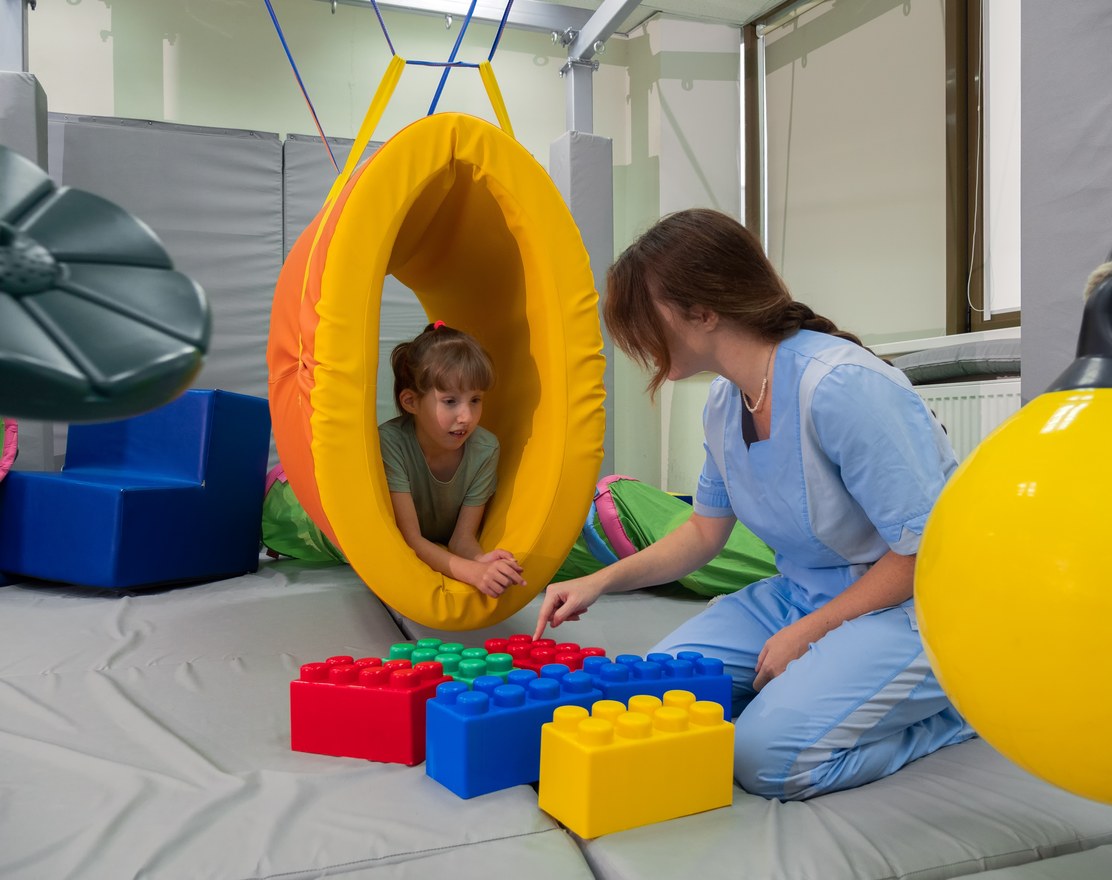
Low-functioning autism is an informal label, not a diagnosis, for autistic people who need a lot of daily support, usually because they speak few or no words, have an intellectual disability, or both. The DSM-5 rates support needs in three levels instead, and autistic people and researchers increasingly ask for the specific need to be described.1,2,3
In everyday English, “low functioning” means working less well than it should, as in a low-functioning kidney. Applied to a person with a developmental or mental health condition, it means being unable to do some things others with the condition can do, and the Cambridge Dictionary marks that sense “sometimes offensive.”4 In autism it has been used for people with an intellectual disability or little speech, the opposite of “high-functioning.”1 Research has since shown that the label predicts poorly what a person can do day to day and tends to underestimate people who cannot speak, which is why autistic people and researchers increasingly describe the support a person needs instead.3,5,6
Key takeaways
- Low-functioning autism is shorthand, not a diagnosis: the DSM-5 rates the support a person needs in three levels, and the ICD-11 records intellectual development and functional language.2,7
- The label usually meant autism with an intellectual disability, little or no speech, or both; in a 2022 US survey of 8-year-olds, 39.6% of autistic children with test results had an intellectual disability.1,8
- IQ is a weak guide to everyday skills: in 2,225 newly diagnosed autistic children, it predicted adaptive behavior poorly.5
- Little speech does not mean little understanding: of 30 autistic children with little or no speech, none could finish a standard IQ test, but 26 completed a nonverbal reasoning test.6
- In a UK survey of 3,470 people, fewer than 10% of autistic adults, families and professionals endorsed the term “low-functioning autism.”1,9
- “Profound autism” is a proposed term for autistic people who need round-the-clock care; 16.5% of autistic 8-year-olds met an updated definition in 2022, and the term is debated too.10,11,12
- Support needs shift with setting, stress and age, and autistic burnout can bring a loss of skills.1,7,13
- Instead of a label, describe the need: how the person communicates, what help they need, and where.1,12
What is low functioning autism?
“Low-functioning autism” is an informal way of describing autistic people who need a great deal of help in daily life. It has usually meant autism together with an intellectual disability, very little or no spoken language, or both, as opposed to “high-functioning autism,” which was used for autistic people without an intellectual disability.1,5 It is not a diagnosis. The DSM-5 criteria rate how much support a person needs, and the ICD-11 records intellectual development and functional language as separate qualifiers.2,7
Before setting it aside, it is worth being fair about what people using the term usually mean. “Low-functioning” tends to be applied when some combination of the following is true:
- The person speaks few or no words, or does not use speech reliably to communicate.12,14
- The person has an intellectual disability.1
- The person needs substantial help with everyday activities such as dressing, eating and personal care.10
- The person needs supervision to stay safe.10,15
- People who do not know the person well find it hard to understand them.12
These are real things. A parent who describes a child as low-functioning is usually trying to convey, quickly, that the child needs a lot of support, and that is a legitimate thing to want to say. The problem is not the intent. It is that the label does not do the job.
What does “low functioning” mean?
The phrase has two meanings. In its general sense, low functioning means working less effectively than it should, and doctors use it of organs: a low-functioning kidney or thyroid. Applied to a person with a mental health condition or a condition that affects development, it means not being able to do some things that others with the condition can do.4
The Cambridge Dictionary labels the second sense “sometimes offensive,” and explains why: the word does not make clear that people have different needs, or that someone may be able to do some things and not others, and it can suggest that a group of people is less important.4 So when someone searches for what a “low functioning person” is, the honest answer is that it is a description of how much help someone appears to need, not a measurement, and a description many of the people it is used about reject.3,4
Is “low spectrum autism” the same thing?
Yes, in everyday use. “Low spectrum autism” and “low on the spectrum” are informal ways of saying the same thing; the Cambridge Dictionary’s own example of the word in use is a child “at the low-functioning end of the autism spectrum.”4 The picture they draw is of a single line from mild to severe, which is not how either diagnostic manual describes autism: the ICD-11 notes that autistic people show the full range of intellectual and language abilities, and its codes treat those two as separate dimensions.7 “Severe autism” has the same problem when it is used without saying what is severe.1
Why are functioning labels being retired?
Four reasons, each independent of the others.
It bundles things that are separate. Speech, language understanding, intellectual ability, motor control, sensory tolerance and the help a person needs each day are distinct, and they do not move together. Researchers point out that autistic people often have uneven, “spiky” profiles, and that a blanket functioning label hides this.1 The ICD-11 already codes intellectual development and functional language separately because they vary independently.7
It predicts little that helps. If a teacher, therapist or new support worker hears that a child is “low-functioning,” they still do not know whether the child can read, what they understand, how they communicate, what distresses them or what help they need.1,12
It underestimates people. Researchers who reviewed the language used about autism concluded that functioning labels are inaccurate and that people labeled “low functioning” are underestimated in what they can actually do.1
Most of the people it describes do not want it. In a UK survey of 3,470 autistic people, family members and professionals, fewer than 10% endorsed “low-functioning autism,” and in a 2025 survey of 516 autistic people the authors concluded that the least offensive choice is not to use functioning labels at all.1,3,9
Does IQ predict everyday skills in autism?
Not well. A study of 2,225 autistic children aged 1 to 18, recorded at diagnosis in a prospective register, compared IQ with a standard measure of everyday living skills. IQ was a weak predictor. Children with an intellectual disability had everyday skills close to their IQ scores, but children without one scored well below their IQ on everyday skills, and the gap stayed large at older ages. The authors argued that “high functioning autism” is an inaccurate descriptor and should be abandoned.5
The same logic applies at the other end. If an IQ score does not tell you how a person manages daily life, a label built on IQ, speech or appearance does not either. Clinicians assigning DSM-5 support levels are expected to weigh cognitive, language, behavioral and everyday functioning together, not any one of them alone.16
Can a nonspeaking person understand more than they can say?
Yes, and this is where functioning labels do the most damage. Speech is a motor skill as well as a language skill. In a study of 54 autistic children and teenagers with little speech, 13 showed signs of suspected childhood apraxia of speech, a difficulty planning the movements of speech, and another 16 had other motor speech impairments.17 For those children, how many words they produce is limited by movement, not only by language. Some nonspeaking autistic people learn to type or spell to communicate, and others use word-based AAC.12
Standard tests can miss what they understand. In a school-based study, 30 autistic children aged 6 to 12 with little or no spoken language were given a standard IQ test and a nonverbal reasoning test. None could complete the standard test; 26 completed the reasoning test, and 17 of them scored between the 5th and 90th percentile.6 An earlier study found autistic children scored on average 30 percentile points higher on the same reasoning test than on a standard IQ test, a gap typically developing children did not show.18
About 30% of autistic children remain minimally verbal into the school years, and researchers describe this group as highly varied and hard to assess fairly with standard tools.14 That is a reason for caution, not a reason to assume the lowest possible level of understanding. The page on nonverbal autism and the guide to apraxia of speech go further into both.
How do low expectations limit what a person is offered?
A label that says someone cannot learn can become a reason not to teach them. In 1984, writing about the education of autistic students, Anne Donnellan proposed what she called the criterion of the least dangerous assumption: when there is no conclusive evidence about what a student can do, base decisions on the assumption that does the least harm if it turns out to be wrong.19 Assuming a nonspeaking child understands, and teaching accordingly, costs little if the assumption is wrong. Assuming they do not, and withholding teaching and communication tools, costs a great deal if it is wrong.
Communication support is the clearest case. The American Speech-Language-Hearing Association states that there are no prerequisites for augmentative and alternative communication (AAC), that impaired cognition does not rule out communication, and that anyone whose communication does not meet their needs is a candidate.20 Withholding AAC until a child “proves” readiness is the low-expectation trap in practice.
What replaced functioning labels in the DSM-5 and ICD-11?
The DSM-5 replaced the separate diagnoses of autistic disorder, Asperger’s disorder and pervasive developmental disorder not otherwise specified with a single autism spectrum disorder diagnosis.2 It asks clinicians to rate current severity in three levels of support, separately for social communication and for restricted, repetitive behaviors, and to specify whether autism comes with or without intellectual impairment and with or without language impairment.2
| DSM-5 level | Wording in the criteria |
|---|---|
| Level 1 | Requiring support |
| Level 2 | Requiring substantial support |
| Level 3 | Requiring very substantial support |
This describes what a person needs rather than what they are, which is an improvement: support can be provided, adjusted or withdrawn, whereas “functioning” sounds like a fixed property. But the levels are debated too. They were introduced with little description of how to assign them, and the same level can be reached for different reasons, because the level of needed support depends on cognitive, language, behavioral and everyday functioning as well as on autism itself.16,21 Needs also vary by situation and over time, a point the ICD-11 makes about autism generally.7
How are the support levels used in practice?
Unevenly. In the CDC’s surveillance network, fewer than half (40.4%) of autistic 4- and 8-year-olds with a diagnosis had any severity level in their records, ranging from 4.8% to 73.2% by site. Where a level was recorded, level 2 was the most common in each domain (41.0% to 50.9%), with fewer level 1 (21.3% to 26.5%) and level 3 (23.2% to 32.5%) ratings. The authors concluded that the wide variation limits how useful the levels are for identifying needed services.21
In a clinic sample of 158 people, about half were rated level 2 in each domain, no one was rated level 1 in one domain and level 3 in the other, and higher levels went with lower everyday skills.22 So “level 3 autism” is the nearest thing in the manual to what people mean by low-functioning, but it is a rating of support needed at the time, in one or both domains, not a description of intelligence or worth.2,22
How does the ICD-11 describe the same differences?
The ICD-11, the World Health Organization’s classification, has no severity levels. Instead it combines two qualifiers: whether there is a co-occurring disorder of intellectual development, and how much functional language the person has, meaning the ability to use spoken or signed language to express needs and wishes.7
| ICD-11 code | Intellectual development | Functional language |
|---|---|---|
| 6A02.0 | No disorder of intellectual development | Mild or no impairment |
| 6A02.1 | Disorder of intellectual development | Mild or no impairment |
| 6A02.2 | No disorder of intellectual development | Impaired |
| 6A02.3 | Disorder of intellectual development | Impaired |
| 6A02.5 | Disorder of intellectual development | Absent or almost absent |
Impaired functional language means not being able to use more than single words or simple phrases. A co-occurring disorder of intellectual development is diagnosed in its own right, graded mild, moderate, severe or profound.7 That keeps intellectual ability and language apart, which is exactly the distinction “low-functioning” erases.1,7
What is profound autism, and is it a new name for low functioning?
“Profound autism” is an administrative term proposed in 2021 by a Lancet Commission to draw attention to autistic people whose needs require lifelong, round-the-clock care. The commission’s first definition was an IQ below 50 or being nonverbal or minimally verbal.10,15 A 2026 consensus study of researchers, caregivers, autistic people and clinicians proposed a research definition: at least 8 years old, everyday skills well below age level, needing adult supervision for health and safety, and an IQ below 50 and/or speech limited to single words or fixed phrases used mainly for basic needs.10
Using the earlier definition, 26.7% of autistic 8-year-olds in the CDC’s network from 2000 to 2016 had profound autism.15 Using the updated one, 16.5% of 7,084 autistic 8-year-olds in 2022 met it, and another 32.1% met one part of it; the information needed to decide was missing for almost half.11
Supporters see the term as a way to make sure the people with the highest needs are counted and served.10,15 Critics argue that it repeats the problems of “low functioning”: it lumps together people with speech disabilities and people with intellectual disabilities, it underestimates people whose IQ tests are not valid for them, and it does not help plan supports, which should rest on each person’s goals and needs.12 Whatever term is used, the description of what the person needs is what does the work.
How many autistic people have an intellectual disability or speak few words?
In the CDC’s 2022 survey, autism was identified in 1 in 31 eight-year-olds across 16 US sites. Among the 5,292 autistic 8-year-olds whose records included cognitive test results, 39.6% had an intellectual disability, defined as an IQ of 70 or below or an examiner’s statement.8 About 30% of autistic children remain minimally verbal into the school years.14
These two groups overlap but are not the same. Autistic people show the full range of intellectual and language abilities, some nonspeaking autistic people do not have an intellectual disability, and some autistic people have a learning disability while others have average or above average intelligence.7,12,23 Counting how many people fall into a group is useful for planning services; it says nothing about any one person.
How can you describe high support needs without a functioning label?
Describe the specific thing. It takes a few more words and tells the listener far more. Researchers recommend replacing “high-” and “low-functioning” with the characteristic actually meant, such as an intellectual disability, and spelling out what “severe” refers to.1
| Instead of | Say |
|---|---|
| “He’s low-functioning” | “He uses AAC to communicate” · “He needs one-to-one support in unfamiliar places” |
| “Severe autism” | “She needs substantial support with daily activities” |
| “Nonverbal” | “Nonspeaking”: she communicates, just not with speech |
| “He can’t communicate” | “He communicates through gesture and a device rather than speech” |
| “Low spectrum” | “He has an intellectual disability and needs help with dressing and meals” |
| “She functions at a two-year-old level” | “She understands short spoken instructions and is learning to use a letter board” |
If a school or clinician uses functioning language, you do not have to make it a conflict. A useful redirect is to ask for specifics: “When you say low-functioning, what specifically does he need help with?” That moves the conversation to something actionable. Planning that starts from a person’s goals and needs, rather than from a label, is what critics of functioning labels and profound autism alike ask for.12
On “autistic” or “person with autism”, there is no single answer. In the UK survey, “autistic” was endorsed by many autistic adults and parents but by fewer professionals, while “person with autism” was endorsed by almost half of professionals.9 In the 2025 survey of autistic people, 97% found “autistic” acceptable.3 When you can, ask the person or family which they prefer.
Why say nonspeaking rather than nonverbal?
“Verbal” comes from the Latin for word or language, so “nonverbal” implies that a person who does not speak has no language. Many people who do not speak read, type, spell, sign or use AAC; they use language, just not speech. “Nonspeaking” describes the difficulty accurately.12 Researchers use “minimally verbal” for children with very few spoken words, and the ICD-11 speaks of functional language, spoken or signed, rather than speech.7,14
Why do support needs change with setting, stress and age?
Because functioning is not a fixed trait. The ICD-11 notes that autistic differences may vary with social, educational or other context, and that some autistic people function adequately in many settings only through exceptional effort that others do not see.7 Researchers reviewing autism language add that functioning varies across time and context and may depend more on whether the right supports are in place than on whether someone has an intellectual disability.1
The same person may need very substantial support in a noisy, unfamiliar place and much less at home. Needs can also change sharply during autistic burnout, which autistic adults describe as chronic exhaustion, loss of skills and lower tolerance of sensory input, brought on by accumulated stress without relief; time off, reduced expectations and acceptance helped.13
How do sensory differences affect what an autistic person can do?
Both diagnostic manuals include sensory differences in autism. The DSM-5 criteria list hyper- or hyporeactivity to sensory input or unusual interest in sensory aspects of the environment, and the ICD-11 lists lifelong hypersensitivity or hyposensitivity to sounds, light, textures, smells, tastes, heat, cold or pain.2,7
This matters directly here. Much of what gets read as low functioning can be a person coping with an environment that is overwhelming for them. The ICD-11 notes that outbursts in autism are often linked to a specific trigger, such as a change in routine or aversive sensory input, rather than to defiance.7 Before concluding anything about someone’s abilities, look at the setting they were assessed in: the noise, the light, the people and the demands.
What support helps autistic people with high support needs?
Support works best when it is built around the specific needs a functioning label hides.
- A way to communicate now. AAC, from picture and letter boards to devices, has no prerequisites. Using it alongside speech may help natural speech, and a review of 28 studies found AAC resulted in improved speech production in autistic children.20,24 The speech and language section and speech therapists in the directory are a place to start.
- Assessment that looks for strengths. Standard IQ tests can miss what a nonspeaking child understands; nonverbal reasoning tests have shown abilities the standard tests did not.6,18
- Support for motor speech. Where a child shows signs of childhood apraxia of speech, the barrier may be planning the movements of speech, which calls for a speech-language assessment.17
- A sensory-aware environment. Because aversive sensory input is a common trigger for outbursts, the sensory load at home and school is worth looking at.7
- Room to recover. For autistic adults, rest, reduced demands and acceptance are what helped in burnout.13
Browse occupational, physical, and speech therapy providers by city and state.
Browse the DrSensory Therapy Directory →Popular next reads
Frequently Asked Questions
What are the DSM-5 autism levels?
Level 1 is requiring support, level 2 requiring substantial support and level 3 requiring very substantial support, rated separately for social communication and for restricted, repetitive behaviors. They describe what a person needs rather than what they are, though how clinicians assign them varies widely.2,21
Is low-functioning autism a real diagnosis?
No. It is informal shorthand and is not a category in the DSM-5 or the ICD-11. The DSM-5 uses three levels of support and specifiers for intellectual and language impairment; the ICD-11 codes intellectual development and functional language separately.2,7
What should I say instead of low-functioning?
Describe the specific support needed: “uses AAC to communicate,” “needs one-to-one support in unfamiliar settings,” “needs help with dressing and personal care.” Concrete descriptions tell people what to do, which is what researchers recommend in place of functioning labels.1
My child's school uses this term. What should I do?
You do not need to make it a confrontation. Asking “when you say low-functioning, what specifically does he need help with?” moves the conversation toward something actionable. You can also ask that support needs be described specifically in the paperwork, since planning should rest on goals and needs.12
Why do autistic people object to functioning labels?
Because the labels describe how a person appears to others rather than what they need, because they are stigmatizing, and because people labeled “low functioning” tend to be underestimated. In a survey of 516 autistic people, the authors concluded that not using functioning labels is the least offensive option.1,3
Does being nonspeaking mean someone has an intellectual disability?
No. Speech production and intellectual ability are separate. Some nonspeaking autistic people have no intellectual disability and communicate by typing, spelling, sign or AAC, and standard IQ tests can underestimate people who cannot speak.6,12
What is the difference between low-functioning and high-functioning autism?
Neither is a diagnosis. “High-functioning” was used for autistic people without an intellectual disability and “low-functioning” for those with one or with little speech. Research has found that IQ predicts everyday skills poorly, so both labels mislead.1,5
Is low-functioning autism the same as level 3 autism?
Not exactly. Level 3 means requiring very substantial support in social communication, repetitive behaviors or both, at the time of assessment. It is about support needed, not intelligence, and a person’s level can differ between the two domains.2,22
Is profound autism the same as low-functioning autism?
It overlaps but is narrower and more defined. Profound autism is a proposed term for autistic people who need round-the-clock care, with an IQ below 50 or very limited speech. It is debated for some of the same reasons as functioning labels.10,12
What does “nonverbal autism” mean?
It usually means autism with little or no spoken language. Many people prefer “nonspeaking,” because a person who does not speak may still understand and use language through typing, sign or AAC.12,14
Can an IQ test underestimate an autistic child?
Yes. In one school study, none of 30 autistic children with little speech could finish a standard IQ test, but 26 completed a nonverbal reasoning test, and 17 of those scored between the 5th and 90th percentile.6
Does AAC stop a child from learning to talk?
The evidence says no. A review of 28 studies found AAC resulted in improved speech production in autistic children, and the American Speech-Language-Hearing Association states that there are no prerequisites for AAC.20,24
How many autistic children have an intellectual disability?
In the CDC’s 2022 survey, 39.6% of autistic 8-year-olds with cognitive test results had an intellectual disability. The rest did not, which is one reason a single label for all autistic people with high support needs misleads.8
Sources
- Bottema-Beutel K, Kapp SK, Lester JN, Sasson NJ, Hand BN. Avoiding ableist language: suggestions for autism researchers. Autism in Adulthood. 2021;3(1):18–29. PMID 36601265. Checked October 11, 2026.
Show the passageHide the passage
“Autistic people without ID are sometimes referred to as ‘high-functioning,’ with the assumption that these individuals will function better than autistic individuals with ID (often referred to as ‘low functioning’). Autistic people have argued against the use of these labels both because they are stigmatizing, and because they inaccurately reflect their experience.” “Functioning can also vary across time and context and may depend more on the adequacy of supports provided than on the presence or absence of ID.” “Functioning labels are therefore not only inaccurate, but they can also result in situations where autistic people labeled ‘high functioning’ are not provided with the supports they need, while autistic people labeled ‘low functioning’ are underestimated in regard to their actual capabilities. We encourage researchers to replace terms such as ‘high-’ and ‘low-functioning’ with descriptors of the characteristics they intend to convey (e.g., ID). Another instance of this phenomenon is when autistic people are described as ‘severely’ affected, without including specific information about what contributes to this classification.” Citing Kenny 2016: “few autistic adults, family members/friends, or health care professionals endorse the use of functioning-level descriptors such as ‘high-functioning’ autism (approximately 20% endorse) and ‘low-functioning’ autism (<10% endorse).” - Centers for Disease Control and Prevention. Clinical Testing and Diagnosis for Autism Spectrum Disorder. Page dated May 8, 2025. Checked October 11, 2026.
Show the passageHide the passage
The DSM-5 criteria as the CDC reproduces them: “Specify current severity: Severity is based on social communication impairments and restricted, repetitive patterns of behavior. For either criterion, severity is described in 3 levels: Level 3 – requires very substantial support Level 2 – Requires substantial support Level 1 – requires support.” Among the restricted, repetitive behaviors: “Hyper- or hyporeactivity to sensory input or unusual interest in sensory aspects of the environment (e.g. apparent indifference to pain/temperature, adverse response to specific sounds or textures, excessive smelling or touching of objects, visual fascination with lights or movement).” “Intellectual disability and autism spectrum disorder frequently co-occur.” “Individuals with a well-established DSM-IV diagnosis of autistic disorder, Asperger’s disorder, or pervasive developmental disorder not otherwise specified should be given the diagnosis of autism spectrum disorder.” “Specify if: With or without accompanying intellectual impairment With or without accompanying language impairment.” - Keates N, Martin F, Waldock KE. Autistic people’s perspectives on functioning labels and associated reasons, and community connectedness. Journal of Autism and Developmental Disorders. 2025;55(4):1318–1328. PMID 38507152. Checked October 11, 2026.
Show the passageHide the passage
“516 autistic respondents completed our survey.” “97% of respondents stated that they find the term ‘autistic’ acceptable. Respondents who did see merit in using functioning labels to describe autistic people also reported not necessarily using them about themselves.” “This means using identity-first language and not using functioning labels.” - Cambridge Dictionary. Low-functioning. Cambridge Advanced Learner’s Dictionary & Thesaurus. Checked October 11, 2026.
Show the passageHide the passage
First sense: “not working very effectively or as well as it should” (“The patient had two low-functioning kidneys”). Second sense, marked “sometimes offensive”: “(of someone who has a mental health condition or a brain condition that affects their development) not able to do some things that some other people with the condition can do.” Usage note: “Some people prefer not to describe themselves or others as ‘low-functioning’, because this word does not make it clear that people have different needs and that someone might be able to do some things but unable to do others. Describing someone as ‘low-functioning’ can also be offensive because it suggests that this group of people is less important.” Example: “Their daughter is seven and at the low-functioning end of the autism spectrum.” - Alvares GA, Bebbington K, Cleary D, Evans K, Glasson EJ, Maybery MT, Pillar S, Uljarevic M, Varcin K, Wray J, Whitehouse AJ. The misnomer of ‘high functioning autism’: intelligence is an imprecise predictor of functional abilities at diagnosis. Autism. 2020;24(1):221–232. PMID 31215791. Checked October 11, 2026.
Show the passageHide the passage
“‘High functioning autism’ is a term often used for individuals with autism spectrum disorder without an intellectual disability.” “Participants (n = 2225, 1-18 years of age) ... Regression models suggested that intelligence quotient was a weak predictor of Vineland Adaptive Behaviour Scales after controlling for sex. Whereas the intellectual disability group’s adaptive behaviour estimates were close to reported intelligence quotients, Vineland Adaptive Behaviour Scales scores fell significantly below intelligence quotients for children without intellectual disability.” “We argue that ‘high functioning autism’ is an inaccurate clinical descriptor when based solely on intelligence quotient demarcations and this term should be abandoned in research and clinical practice.” - Courchesne V, Meilleur AA, Poulin-Lord MP, Dawson M, Soulieres I. Autistic children at risk of being underestimated: school-based pilot study of a strength-informed assessment. Molecular Autism. 2015;6:12. PMID 25774281. Checked October 11, 2026.
Show the passageHide the passage
“An important minority of school-aged autistic children, often characterized as ‘nonverbal’ or ‘minimally verbal,’ displays little or no spoken language. These children are at risk of being judged ‘low-functioning’ or ‘untestable’ via conventional cognitive testing practices.” Of 30 autistic children aged 6 to 12 with little or no spoken language: “None of the autistic children could complete WISC-IV; only six completed any subtest. In contrast, 26 autistic children could complete RCPM, with 17 scoring between the 5th and 90th percentile.” - World Health Organization. ICD-11 for Mortality and Morbidity Statistics: 6A02 Autism spectrum disorder. Release 2026-01. Checked October 11, 2026.
Show the passageHide the passage
“Individuals along the spectrum exhibit a full range of intellectual functioning and language abilities.” Deficits “may vary according to social, educational, or other context.” The categories are 6A02.0 “without disorder of intellectual development and with mild or no impairment of functional language”, 6A02.1 “with disorder of intellectual development and with mild or no impairment of functional language”, 6A02.2 “without disorder of intellectual development and with impaired functional language”, 6A02.3 “with disorder of intellectual development and with impaired functional language” and 6A02.5 “with disorder of intellectual development and with absence of functional language.” “Functional language refers to the capacity of the individual to use language for instrumental purposes (e.g., to express personal needs and desires)”; impaired means “not able to use more than single words or simple phrases.” A co-occurring disorder of intellectual development is diagnosed separately, “using the appropriate category to designate severity (i.e., Mild, Moderate, Severe, Profound, Provisional).” “Some individuals with Autism Spectrum Disorder are able to function adequately in many contexts through exceptional effort, such that their deficits may not be apparent to others.” Among the features: “Lifelong excessive and persistent hypersensitivity or hyposensitivity to sensory stimuli or unusual interest in a sensory stimulus”; outbursts “are often associated with a specific trigger (e.g., a change in routine, aversive sensory stimulation, anxiety, or rigidity when the individual’s thoughts or behaviour sequences are interrupted), rather than reflecting an intention to be defiant.” - Shaw KA, Williams S, Patrick ME, et al. Prevalence and early identification of autism spectrum disorder among children aged 4 and 8 years: Autism and Developmental Disabilities Monitoring Network, 16 sites, United States, 2022. MMWR Surveillance Summaries. 2025;74(No. SS-2):1–22. Checked October 11, 2026.
Show the passageHide the passage
“Among children aged 8 years in 2022, ASD prevalence was 32.2 per 1,000 children (one in 31) across the 16 sites.” “Among 5,292 (61.4% of 8,613) children aged 8 years with ASD with information on cognitive ability, 39.6% were classified as having an intellectual disability.” Intellectual disability was defined as an IQ score of 70 or below, or an examiner’s statement of intellectual disability on the child’s most recent IQ test. - Kenny L, Hattersley C, Molins B, Buckley C, Povey C, Pellicano E. Which terms should be used to describe autism? Perspectives from the UK autism community. Autism. 2016;20(4):442–462. PMID 26134030. Checked October 11, 2026.
Show the passageHide the passage
“In all, 3470 UK residents responded to an online survey on their preferred ways of describing autism ... The term ‘autistic’ was endorsed by a large percentage of autistic adults, family members/friends and parents but by considerably fewer professionals; ‘person with autism’ was endorsed by almost half of professionals but by fewer autistic adults and parents.” “There is no single way of describing autism that is universally accepted and preferred by the UK’s autism community.” - Siegel M, Lord CL, Tager-Flusberg H, Ursitti J, Halladay A, Singer AT. Developing a consensus research definition for profound autism using a modified Delphi method. Molecular Autism. 2026;17(1):28. PMID 42380932. Checked October 11, 2026.
Show the passageHide the passage
“In 2021, the administrative term Profound Autism (PA) was proposed by a Lancet Commission to draw attention to autistic people whose impairments require lifelong, round-the-clock care.” “Researchers have subsequently utilized widely varying criteria in studies of this group.” With “over 70 participants who identified as researchers, caregivers, autistic individuals, and clinicians”, “76% of the respondents agreed on a research definition of PA of: adaptive functioning well below age level, requiring adult supervision to ensure physical and mental health, safety and well-being, being at least 8 years old, diagnosed with ASD, and having severely impaired cognitive abilities (reflected by IQ score below 50) and/or not verbally communicating other than single words or fixed phrases used predominantly to have their basic needs met.” - Shaw KA, Russell LA, DiRienzo M, Patrick ME, Valencia-Prado M, Bilder D, Esler A, Pierce K, Vanegas SB, Washington A, Alford A, Anbar J, Mehta R, Maenner MJ. Profound autism prevalence and assessment practices in a population-based study. Journal of the American Academy of Child and Adolescent Psychiatry. Published online October 2, 2026. PMID 42826765. Checked October 11, 2026.
Show the passageHide the passage
“Profound autism is a proposed subcategory of autism including individuals unable to meet basic daily adaptive needs and requiring 24-hour care.” “Among 7,084 8-year-old children with autism from a population-based surveillance program in 13 US sites in 2022 ... Of children with autism, 16.5% met the updated profound autism definition and 32.1% met one element of the definition but did not meet full criteria.” “Adaptive or other assessments underlying the profound autism definition were missing almost half the time.” - Kripke-Ludwig R. “Profound autism” label does not predict strengths or help plan supports. Public Health Reports. 2023;138(6):849–850. PMID 37732335. Checked October 11, 2026.
Show the passageHide the passage
“The term ‘nonverbal’ comes from the Latin verbum, which means ‘a word’ or ‘language’ and falsely implies that people who have sensory–motor difficulties with producing speech do not understand and cannot use language.” “Speech is a complex sensory–movement skill. Many nonspeaking autistics learn to overcome sensory and movement disabilities to type or spell. Other nonspeaking autistics use word-based forms of augmentative and alternative communication. Autistics with IQ scores <50 may be underestimated because they lack the prerequisite sensory and motor skills for valid IQ testing.” “Person-centered planning is based on goals and needs, not on speech abilities or IQ scores.” “The term ‘profound autism,’ like the terms ‘high functioning’ and ‘low functioning,’ dismisses the service ...” - Raymaker DM, Teo AR, Steckler NA, Lentz B, Scharer M, Delos Santos A, Kapp SK, Hunter M, Joyce A, Nicolaidis C. “Having all of your internal resources exhausted beyond measure and being left with no clean-up crew”: defining autistic burnout. Autism in Adulthood. 2020;2(2):132–143. PMID 32851204. Checked October 11, 2026.
Show the passageHide the passage
From 19 interviews and 19 public internet sources: “Autistic adults described the primary characteristics of autistic burnout as chronic exhaustion, loss of skills, and reduced tolerance to stimulus. They described burnout as happening because of life stressors that added to the cumulative load they experienced, and barriers to support that created an inability to obtain relief from the load.” Helpful were “acceptance and social support, time off/reduced expectations, and doing things in an autistic way/unmasking.” - Tager-Flusberg H, Kasari C. Minimally verbal school-aged children with autism spectrum disorder: the neglected end of the spectrum. Autism Research. 2013;6(6):468–478. PMID 24124067. Checked October 11, 2026.
Show the passageHide the passage
“It is currently estimated that about 30% of children with autism spectrum disorder remain minimally verbal, even after receiving years of interventions and a range of educational opportunities. Very little is known about the individuals at this end of the autism spectrum, in part because this is a highly variable population with no single set of defining characteristics or patterns of skills or deficits, and in part because it is extremely challenging to provide reliable or valid assessments of their developmental functioning.” - Hughes MM, Shaw KA, DiRienzo M, Durkin MS, Esler A, Hall-Lande J, Wiggins L, Zahorodny W, Singer A, Maenner MJ. The prevalence and characteristics of children with profound autism, 15 sites, United States, 2000–2016. Public Health Reports. 2023;138(6):971–980. PMID 37074176. Checked October 11, 2026.
Show the passageHide the passage
“A recent Lancet commission defined ‘profound autism’ as having autism with an overall or subdomain intelligence quotient (IQ) score <50 or being nonverbal or minimally verbal. The commission indicated that children with profound autism were also more likely to have self-injurious behavior or epilepsy and require around-the-clock supervision than children without profound autism.” Of “20 135 children aged 8 years with autism during 2000-2016”: “The percentage of 8-year-old children with profound autism among those with autism was 26.7%.” “The definition of profound autism may evolve.” - Mehling MH, Tasse MJ. Severity of autism spectrum disorders: current conceptualization, and transition to DSM-5. Journal of Autism and Developmental Disorders. 2016;46(6):2000–2016. PMID 26873143. Checked October 11, 2026.
Show the passageHide the passage
“In research stratifying individuals on the basis of autism severity, core ASD symptomology is the primary consideration. This conceptualization is disparate from the conceptualization put forth in DSM-5 in which severity determination is based on level of needed support, which is also impacted by cognitive, language, behavioral, and adaptive functioning.” - Chenausky K, Brignell A, Morgan A, Tager-Flusberg H. Motor speech impairment predicts expressive language in minimally verbal, but not low verbal, individuals with autism spectrum disorder. Autism & Developmental Language Impairments. 2019;4. PMID 35155816. Checked October 11, 2026.
Show the passageHide the passage
“Videos of 54 low-verbal and minimally verbal individuals (ages 4;4–18;10) performing portions of a speech praxis test were coded for signs of motor speech impairment (e.g., childhood apraxia of speech).” “Four groups emerged: (1) speech within normal limits (n=12), (2) non-childhood apraxia of speech impairment (n=16), (3) suspected childhood apraxia of speech (n=13), and (4) insufficient speech to rate (n=13).” - Dawson M, Soulieres I, Gernsbacher MA, Mottron L. The level and nature of autistic intelligence. Psychological Science. 2007;18(8):657–662. PMID 17680932. Checked October 11, 2026.
Show the passageHide the passage
“We therefore assessed a broad sample of 38 autistic children on the preeminent test of fluid intelligence, Raven’s Progressive Matrices. Their scores were, on average, 30 percentile points, and in some cases more than 70 percentile points, higher than their scores on the Wechsler scales of intelligence. Typically developing control children showed no such discrepancy ... We conclude that intelligence has been underestimated in autistics.” - Donnellan AM. The criterion of the least dangerous assumption. Behavioral Disorders. 1984;9(2):141–150. Checked October 11, 2026.
Show the passageHide the passage
“The criterion of the least dangerous assumption holds that in the absence of conclusive data educational decisions ought to be based on assumptions which, if incorrect, will have the least dangerous effect on the likelihood that students will be able to function independently as adults. The use of the criterion of the least dangerous assumption in instructional program design, parent involvement, and student evaluation of students with autism is illustrated.” - American Speech-Language-Hearing Association. Augmentative and Alternative Communication (AAC). Practice Portal, undated. Checked October 11, 2026.
Show the passageHide the passage
“There are no prerequisites for AAC intervention ... All individuals are considered candidates for AAC intervention if their communication abilities do not meet communication needs.” “Potential AAC users may believe that AAC reduces motivation to improve natural speech and delays language development. However, AAC use may help improve natural speech when used in a multimodal approach.” “Caregivers and professionals may think that cognitive skills such as demonstrating communicative intent and understanding cause and effect are prerequisite to AAC use. However, impaired cognition does not preclude communication.” - Russell LA, Tinker SC, Shaw KA, Maenner MJ, Dirienzo M, Kirby AV, Howerton EM, Vanegas SB, Lopez M. Prevalence of autism spectrum disorder severity levels from the fifth edition of the Diagnostic and Statistical Manual (DSM-5) in the Autism and Developmental Disabilities Monitoring Network. Journal of Autism and Developmental Disorders. Published online March 2026. PMID 41872583. Checked October 11, 2026.
Show the passageHide the passage
The DSM-5 “introduced severity level specifiers for autism spectrum disorder (ASD) with minimal description of the criteria for categorizing three levels of severity.” “Less than half (40.4%) of children with documented ASD diagnoses had any severity level specified in their records, with wide variation by site (4.8%-73.2%).” “Among children with at least one severity level documented, level 2 was the most common rating across domains (41.0–50.9%), with fewer level 1 (21.3–26.5%) and level 3 (23.2–32.5%) assignments.” “Utilization of the DSM-5’s severity levels by community professionals varied widely, limiting their potential utility in identifying needed services and supports for children with ASD.” - Gardner LM, Campbell JM, Keisling B, Murphy L. Correlates of DSM-5 autism spectrum disorder levels of support ratings in a clinical sample. Journal of Autism and Developmental Disorders. 2018;48(10):3513–3523. PMID 29845346. Checked October 11, 2026.
Show the passageHide the passage
“The DSM-5 features level of support ratings for social communication (SC) and restrictive and repetitive behaviors (RRB) for individuals with autism spectrum disorder (ASD).” In 158 people: “Roughly 46% of individuals were identified by licensed psychologists’ clinical judgement as needing Level 2 SC support and 49% were identified as needing Level 2 RRB support. No individuals were rated as needing a combination of Level 1/Level 3 supports across domains.” Both groups “showed a graded pattern of higher adaptation/lower autism severity to lower adaptation/higher autism severity from Level 1 to Level 3.” - NHS. What is autism? Page last reviewed May 6, 2026. “Autism is a difference in how your brain develops that affects how you see and experience the world.” “Some autistic people have a learning disability. Some have average intelligence or above average intelligence.” “Autism is something you’re born with. It’s not an illness.” Checked October 11, 2026.
- White EN, Ayres KM, Snyder SK, Cagliani RR, Ledford JR. Augmentative and alternative communication and speech production for individuals with ASD: a systematic review. Journal of Autism and Developmental Disorders. 2021;51(11):4199–4212. PMID 33511525. Checked October 11, 2026.
Show the passageHide the passage
“Twenty-five single case design articles and three group design articles published between 1975 and May 2020 met inclusion criteria ... Overall, AAC resulted in improved speech production; however, speech gains that did occur did not surpass AAC use.”
Medical disclaimer. This page is for general educational purposes and does not constitute medical advice, diagnosis, or treatment. Diagnostic terminology changes over time; a diagnosis you or your child received remains valid. Always consult a qualified healthcare provider about your child.