
Sensory processing
My Child Can't Cope With Loud Noises: What Helps
Reducing input is the thing that works: what to do first, and what is worth buying only after that.
- Editorially Reviewed
- Evidence Based
- Patient Focused
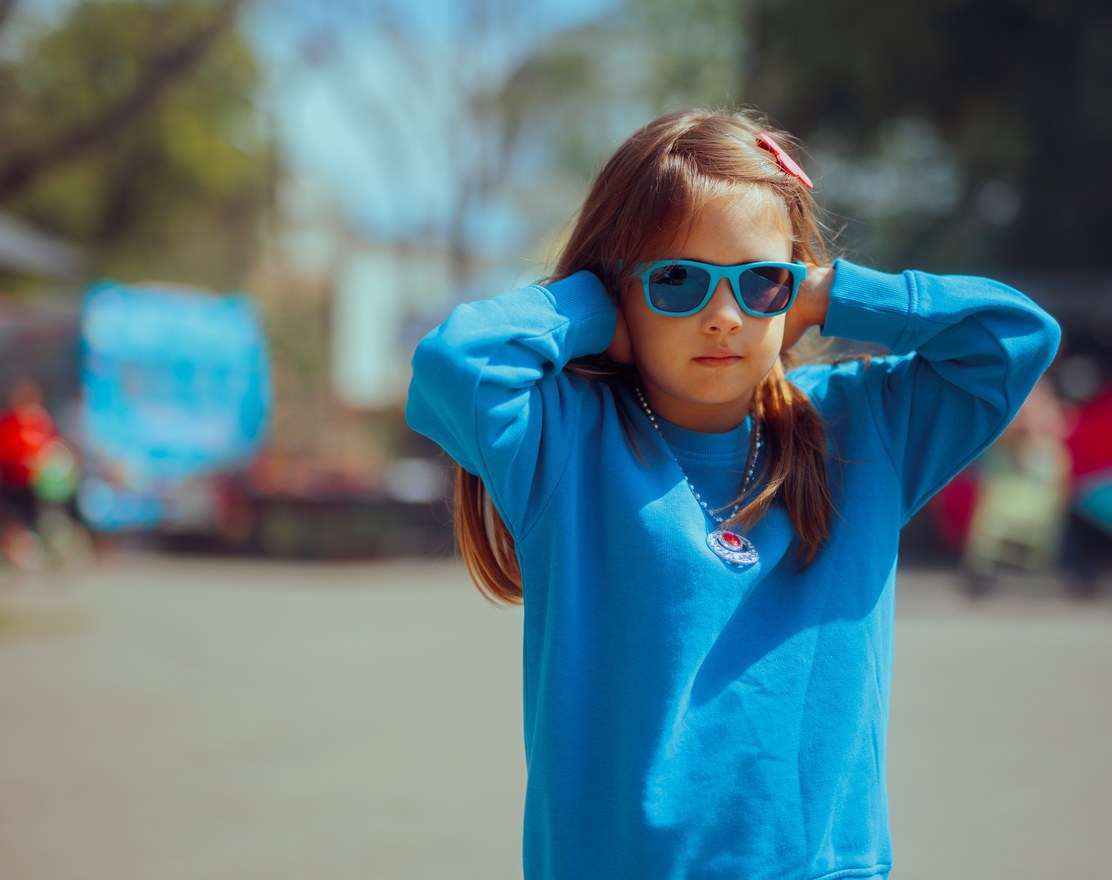
Covering the ears, crying or melting down at loud noises is how many children show that everyday sound feels too loud, painful or frightening.1 Get hearing checked first, cut noise where you can, keep ear protection for genuinely loud situations, prepare your child for predictable ones and give them a way out.
A child who covers their ears at hand dryers, panics at assemblies or melts down in busy places is reacting to sound that feels more intense, painful or frightening to them than it does to you. It is not rare: estimates of hyperacusis in children and teenagers range from 3.2% to 17.1%.2 Start with a hearing check, because hearing problems and sound sensitivity can occur together and testing is quick and painless.3,4 After that, the useful steps are practical: reduce exposure where you reasonably can, keep ear protection for loud situations rather than all day, prepare your child before predictable ones and give them a way out. Tolerance is built gradually, with the child in control.1
Key takeaways
- Get hearing checked first: assessment of sound sensitivity starts with a hearing evaluation, hearing loss in one ear is more common in children with hyperacusis, and screening takes minutes.3,4
- Fear of loud noises is common in young children; hyperacusis in children most often first presents at 3 to 4, an age at which clinicians expect much of it to settle as hearing pathways mature.5,6
- Many toddlers outgrow it: of 99 two-year-olds in the top 5% for sound or touch over-responsivity, 75 were no longer there at 7, though early sensitivity also predicted school-age over-responsivity in another study.7,8
- It is not one thing: hyperacusis (everyday sound too loud), misophonia (specific sounds such as chewing) and phonophobia (fear) are handled differently.1,9
- Ear protection helps in loud situations, but audiology guidance advises against it when sound levels are safe; at fireworks (140 to 160 dBA) it protects every child's hearing.1,10
- In the moment the goal is less input, not a lesson: fewer words, let them cover their ears, leave if you can, and allow recovery time.
- Tolerance is built gradually with the child in control, the way audiologists' sound therapy and graded exposure work; surprise exposure has no place in either.1,5
- Sound sensitivity at 11 predicted anxiety at 13 and 16 in 6,621 children, a reason to act on it rather than wait.11
- Audiologists' training in hyperacusis varies, with most of 102 surveyed reporting five hours or less, so ask what a clinician assesses and how the result is used.12
Should I get my child’s hearing checked first?
Yes, before anything else. Sound sensitivity and hearing difficulty can look alike from outside, and they can occur together. Assessment of hyperacusis begins with a full hearing evaluation, including a pure-tone audiogram. In the records of 329 children aged 2 to 17 at an audiology clinic, 18% reported hyperacusis, and hearing loss in one ear was more common among them (15%) than among the other children (9%).3
Ear infections are part of the reason. Five out of six children have at least one by their third birthday; fluid can stay behind the eardrum afterward with no symptoms, and fluid that stays or keeps coming back can affect hearing. Trouble hearing or responding to quiet sounds is one sign to watch for.13
A normal hearing test does not end the question, though. In 278 children aged 6 to 16 with auditory processing disorder, those with hyperacusis tolerated less sound in testing than those without, but routine testing could not tell hyperacusis from misophonia, the results did not reflect how much the problem affected daily life, and past fluid in the ears was equally common in every group.14
Also worth mentioning to the doctor: ear pain, frequent ear infections, or a family history of hearing difficulty. An audiologist asks about birth history, ear infections and hearing loss in the family.4
How do you get a child’s hearing checked?
Ask your child’s doctor for a hearing test as soon as you suspect a problem. Screening is easy, painless and usually takes a few minutes; a child who does not pass has a full audiology evaluation. Babies are screened by 1 month, and children at risk of later hearing loss should have at least one test by 2 to 2½ years. Some tests need no response and can be done while a child sleeps; toddlers are tested by watching them turn toward a sound, rewarded with an animated toy, and older children by turning the test into a game.4
What does an audiologist test for sound sensitivity?
Audiologists play a central role in assessing hyperacusis. Beyond a hearing test, they can measure loudness discomfort levels, the point at which sound becomes uncomfortable, and may repeat the measurement because hyperacusis can fluctuate. Children may show the problem through actions such as covering their ears or crying rather than describe it.1
Worth knowing before you book: in a survey of 102 US audiologists, definitions of hyperacusis and clinical practice varied widely, most had five hours or less of training in it, 63% worked in clinics with no hyperacusis protocol, and the authors conclude that management needs a team approach.12 That is not a reason to skip the appointment. It is a reason to ask what the clinician assesses and how the result is used.
Is it normal for a toddler to be scared of loud noises?
Often, yes. Babies startle at sudden loud sounds through the Moro reflex, which starts to fade after about two months.15 A fear of loud noises is common in childhood, and a phobia is diagnosed only when the fear and its impact are out of proportion to what is expected for the child’s developmental level.5 A toddler who hides from the vacuum cleaner or dislikes a flushing toilet is usually in that ordinary range.
What sets over-responsivity apart is degree. Researchers describe it as reactions that come faster, last longer and are more intense than other children’s, often fear, avoidance, distraction, vigilance or aggression, and strongest when the child did not start the sensation. In 925 children aged 7 to 11, 16% of parents said four or more touch or sound sensations bothered their child; for sound, alarms (12%), sirens and concerts (10% each) were named most often.16
In the studies and case reports gathered by a 2020 scoping review of hyperacusis in children, household appliances were the most commonly reported troublesome sounds, especially vacuum cleaners, along with washing machines, hand dryers, lawn mowers, food processors, toilets flushing, alarms, telephones and doorbells.6
What if my 3-year-old is sensitive to loud noises?
This is the age it most often shows. Studies of children with hyperacusis report the most common age at presentation as 3 to 4, and in clinical practice hyperacusis at that age is considered part of normal auditory development, likely to settle as the central auditory system matures.6 In a study that followed 978 twins, 99 were in the top 5% for sound or touch over-responsivity at age 2; at 7, 75 of them no longer were, while 112 children who had not stood out at 2 did by 7. Symptoms lasted more often in children born prematurely or with more fearful, less soothable temperaments.7
Early sensitivity is still worth noticing: in 521 children followed from 18 months, both early sensory sensitivities and how they changed were associated with over-responsivity at school age.8 Watch whether reactions are to many sounds or a few, how long the distress lasts, and whether it limits meals, sleep or outings. If it does, a hearing check and an occupational therapist experienced with preschoolers are the next steps.
What if my 5-year-old is still sensitive to loud noises?
School often brings it to the surface. Over-responsivity may become evident at school entry because school is more stimulating than home, children have less control over their surroundings, and demands rise.16 It does not always fade: in a UK study of 7,097 eleven-year-olds, 3.7% reported hyperacusis, more often boys.17 Parents of school-age children with marked over-responsivity also reported more emotional, behavioral and regulation problems and weaker social skills, so persistent sensitivity at 5 is worth an assessment rather than more waiting.16
Why is my child so sensitive to loud noises?
Different problems sit behind the same covered ears, and audiologists name them separately: hyperacusis, a heightened sensitivity to ordinary sounds that others tolerate well; misophonia, a strong dislike of certain sounds; and phonophobia, a persistent fear of sound.1 Telling them apart matters because they are handled differently.
Is it hyperacusis, misophonia or a fear of sound?
| Pattern | What sets it off | What the child feels |
|---|---|---|
| Hyperacusis | Everyday sound of moderate loudness, not one particular sound5 | Sound is too loud, painful or overwhelming5 |
| Misophonia | Specific sounds, often mouth sounds such as chewing, slurping or throat clearing, whatever their volume9 | Anger, disgust or extreme irritation5 |
| Phonophobia | Particular sounds, or the places and objects that make them5 | Fear, panic and anxiety in advance, with avoidance5 |
Misophonia is typically first noticed in childhood or early adolescence, and its triggers are about the pattern or meaning of a sound rather than its loudness.9 A child who reacts to a sibling chewing but not to a fire truck is showing a different problem from one who covers their ears in every busy room.
Can sound sensitivity come with other conditions?
Yes. Among children with hyperacusis at one audiology clinic, audiovestibular problems, mental health concerns, speech and language delays, difficulty at school and behavioral problems were all common, and tinnitus often came with it.3 Hyperacusis is also more common in autism and Williams syndrome.1 For difficulty making sense of sound rather than its volume, see auditory processing; when several senses are involved, see sensory over-responsivity.
What should I do in the moment when my child can’t cope with a loud noise?
When a child is already distressed by noise, the goal is reducing input, not teaching anything.
- Get them out, or reduce the noise, if you can
- Fewer words. Talking adds input. A hand on the shoulder and a quiet exit does more than an explanation.
- Don’t ask them to explain while they’re overwhelmed
- Let them cover their ears. It is their own way of turning the volume down.
- Give recovery time afterward. The distress doesn’t end when the noise does; it takes time to come back down.
Afterward, when everyone is calm, is when a conversation is useful. Not during. More on settling an overwhelmed child is in our guide to calming sensory overload.
Do ear defenders or earplugs help a child who is sensitive to loud noises?
Yes, for specific loud situations. The trials so far are small and in autistic children, but they point the same way: two weeks of standard earmuffs improved sound-related behavior in a study of 21 children aged 4 to 16, noise-attenuating headphones lowered skin conductance, a measure of stress arousal, in six children aged 8 to 16, and parents and teachers said headphones increased children’s participation at home, in the community and at school.18,19,20
Over-ear defenders: the most protection and the most visible. Good for young children and for predictably loud events.
Earplugs and filtered earbuds: less conspicuous, which matters to many older children.
Noise-canceling headphones: in the one comparison, in autistic children, standard earmuffs did better across the group, though noise-canceling headphones helped five children and four refused both.18
Can wearing ear protection all day make noise sensitivity worse?
Ear protection is recommended for specific loud situations rather than all day. The American Speech-Language-Hearing Association’s guidance says hearing protection to avoid disturbing sounds is generally not advisable when sound levels are safe, because avoiding everyday sound can make the auditory system more sensitive when the protection comes off.1
Use it for the situations that need it: assemblies, cafeterias, fireworks, hand dryers, busy events. Take it off in calm places.
If your child wants it on constantly, treat that as information rather than a problem. It can mean the overall sensory load is too high, rather than that more protection is needed. That’s worth raising with an occupational therapist. → Find an occupational therapist
A practical note for older children: visible ear defenders carry a social cost. A child who refuses them isn’t being unreasonable; they’re weighing sensory cost against social cost. Less conspicuous earbuds are usually the answer, not insistence. → Sensory processing differences in teenagers
When does a child need hearing protection for safety?
Some sound is loud enough to damage hearing, whoever hears it. Sounds at or below 70 dBA are unlikely to cause hearing loss even after long exposure, but long or repeated exposure at or above 85 dBA can, and the louder the sound, the faster. Concerts and sporting events reach 94 to 110 dBA, sirens 110 to 129 and a fireworks show 140 to 160. Distance and time matter, and the advice is to protect the ears of children too young to protect their own.10 At events like these, protection is for every child, not only a sensitive one.1
Which situations cause the most trouble for a child who doesn’t like loud noises?
Hand dryers. A frequent trigger: in one case report a child avoided public restrooms in case a dryer started, and had toileting accidents as a result.6 Practical options: carry a paper towel, use restrooms without dryers on routes you use often, put ear defenders on before going in, or cover their ears yourself.
School assemblies. Ask about sitting at the back or near a door, arriving after everyone has settled, ear protection, or skipping a particularly loud event. → What to ask the school for
The cafeteria. Children with hyperacusis in case reports avoided noisy dining halls and spent recess in the quiet of the library.6 Options: eating somewhere quieter, eating slightly earlier or later, or a designated quieter space. → Sensory processing and learning
Birthday parties and events. Arriving early before it fills up, knowing where the quiet space is, leaving before they need to. In one case report, guests had to whisper “happy birthday” at the child’s own party.6 Shorter and successful beats longer and overwhelming.
Fireworks and thunder. Predictable, so preparable. A fireworks show reaches 140 to 160 dBA, so ear protection and distance matter for hearing as well as comfort.10 Add a familiar room, background sound such as music or a film, and advance warning where you have it. → Sensory-friendly holidays
Restaurants and shops. Quieter times, booths rather than open floors, and a seat facing away from the busiest area.
Transport. Over-ear defenders or headphones, a familiar playlist and a seat away from the engine or doors.
The dentist. In a pilot study, autistic and non-autistic children aged 6 to 12 both showed lower physiological anxiety and reported less pain and discomfort in a dental room adapted with dimmed lighting, rhythmic music and a weighted wrap, and a 2018 systematic review rated that evidence as moderate.21,22 → Sensory-friendly dentistry
How can I make home easier for a child who is sensitive to noise?
Soften the rooms. The changes audiologists suggest for noisy classrooms can be borrowed for home: rugs, curtains, soft materials on walls, soft tips on chair legs, and switching off noisy equipment when it is not in use.23
Give warning and control over appliances. Over-responsive children react most strongly to sensations they did not start,16 so run the vacuum, blender or hair dryer when your child is out of the room or after a warning, and let them press the switch themselves.
Use background sound carefully. A steady sound can mask sudden household noises, but keep a sound machine quiet and away from the bed: at maximum volume, all 14 infant sleep machines tested in a 2014 study exceeded the 50 dBA limit recommended for hospital nurseries at 30 cm, and three exceeded 85 dBA.24 → Noise machines for babies: benefits and risks
Keep a quiet retreat. A corner with soft furnishings that the child can go to without asking costs nothing. → A sensory-friendly home
How do I prepare my child for a loud place in advance?
Prediction reduces distress, and it’s free. In interviews about noise-attenuating headphones, preparing a child to use them was the strategy that reduced the barriers, and many children learned to predict when they needed them.20
- Tell them what’s coming: where, how long, how loud, what happens
- Agree an exit signal before you go in. A word, a gesture, anything. Knowing they can leave often means they don’t need to.
- Bring what helps: ear protection, something to hold, something familiar
- Plan the exit route before you need it
- Debrief afterward: what was hard, what helped. Over time this builds their own understanding of what they need.
Can a child build tolerance to loud noises without being forced?
The approaches clinicians use are gradual and keep the child in control. ASHA describes sound therapy for hyperacusis as listening to low-level sound for long periods, with level and duration raised gradually alongside positive reinforcement, and there is limited evidence that graded exposure helps when fear of a sound is the main problem.1,5 Forcing a child to endure noise is not part of either.
One version that works at home: play recordings of the sounds that cause trouble, such as a siren, a hand dryer or a dog, at low volume, with your child holding the volume control and choosing what comes next. Talk about what each sound is for. Letting the child make the noise, with bells, a drum or a rainstick, is exposure with maximum control, and for a young child it can be easier than any recording.
What tends to help
- Starting well below the difficult level: a recording at low volume, at a distance, with control over stopping it
- Giving them control. Over-responsive children react most to sensations they did not start.16
- Building slowly, over weeks rather than sessions
- Pairing with something enjoyable
- Stopping at the first sign of distress, not after
What doesn’t
- Surprise exposure as “practice.” Fear of a sound is learned as a threat and kept going by avoidance,5 and an ambush teaches exactly that threat.
- Insisting they stay in an environment that’s overwhelming them
- Telling them it isn’t loud. It is, to them, and being contradicted about your own experience is its own kind of distressing.
- Removing ear protection to build tolerance. That isn’t graded exposure, it’s just exposure.
An occupational therapist can build a graded program around your child’s goals and daily routines. → sensory activities
Can therapy help a child who is afraid of loud noises?
It can, when fear or distress is the main problem. ASHA’s guidance includes counseling for the child and family and referral for psychotherapy such as cognitive behavioral therapy, and in a survey of US audiologists 80% said they routinely recommend CBT.1,12 A scoping review of hyperacusis in children found psychological therapy, sound therapy, tinnitus retraining therapy, medication and neuro-rehabilitation all reported with positive outcomes, but none compared with another or tested in trials designed for children.6 Our overview of CBT for anxiety explains how that therapy works.
Can sound sensitivity lead to anxiety in children?
It can predict it. In a UK study following 6,621 children, sound sensitivity reported at age 11 predicted anxiety at ages 13 and 16, and at 13 the link held after accounting for earlier anxiety and for autism traits, ADHD, dyslexia and dyspraxia; it was most strongly tied to fear, worry and nervousness.11 That is an association in a group rather than a forecast for any one child, and it does not show that one causes the other.
It fits a wider pattern: school-age children with marked over-responsivity had more emotional and behavioral problems, and early over-responsivity lasted more often in children with fearful temperaments.7,16 What it suggests is that sound sensitivity is worth taking seriously as more than a difficulty of the moment. Our guide to managing anxiety in children covers the next steps when worry is part of the picture.
When should a child who is sensitive to loud noises be assessed?
Worth an appointment if
- Hearing hasn’t been checked
- Noise sensitivity is affecting school, meals, sleep, or family activities
- Your child is avoiding places or activities they’d otherwise enjoy
- Reactions are escalating rather than settling
- Sensitivity is one of several sensory difficulties → Sensory over-responsivity
- Your child reacts strongly to specific sounds rather than to volume generally: chewing, tapping, breathing. That’s a distinct pattern and worth mentioning specifically.
- Your child wants ear protection on constantly
An occupational therapist can assess the wider sensory picture; an audiologist assesses hearing and sound tolerance. Both are useful, and they answer different questions. For difficulty making sense of sound rather than its volume, see auditory processing. For the autism-specific angle, including masking and meltdown versus shutdown, see autism and noise sensitivity.
Which professional should assess noise sensitivity?
| Professional | What they look at |
|---|---|
| Pediatrician | The first stop: ask for a hearing test, or a referral for one4 |
| Audiologist | Hearing, and loudness discomfort levels for hyperacusis, which may be measured more than once1 |
| Occupational therapist | How sound fits with the other senses and with daily routines, and practical changes at home and school |
| Psychologist or therapist | Fear, avoidance and anxiety, including cognitive behavioral therapy1 |
No single profession owns this: a survey of US audiologists concluded that managing hyperacusis needs a multidisciplinary approach.12
Popular next reads
Frequently Asked Questions
Is this autism?
Not necessarily. Unusual reactions to sound are one possible sign of autism among many, and the CDC notes that children without autism can have some of these signs. Hyperacusis estimates for children in general range from 3.2% to 17.1%. Mention it in any developmental assessment, alongside social and communication milestones.2,25 → Autism and noise sensitivity.
Do ear defenders help?
Yes, for specific loud situations. Small studies in autistic children found earmuffs improved sound-related behavior and noise-attenuating headphones lowered stress arousal and increased participation. Keep them for the situations that need them.18,19,20
Will they grow out of it?
Many do. Of 99 two-year-olds in the top 5% for sound or touch over-responsivity in a twin study, 75 were no longer there at 7; it lasted more often in children born prematurely or with fearful temperaments. Tolerance also varies with tiredness and stress, so a bad week is not necessarily a trend.7
What about hand dryers specifically?
A frequent trigger: in one case report a child avoided public restrooms because of them. Carry a paper towel, use restrooms without dryers on routes you use often, put ear protection on before going in, or cover their ears yourself.6
Can wearing ear defenders all the time make it worse?
Audiology guidance says hearing protection is generally not advisable when sound levels are safe, because avoiding everyday sound can make the auditory system more sensitive. Use it for loud situations, and treat a child wanting it on constantly as a sign the overall sensory load is too high.1
Why does my child cover their ears at ordinary sounds?
Most likely because those sounds feel more intense to them than to you; children often show hyperacusis by covering their ears or crying rather than in words. Get hearing checked first, since hearing problems and sound sensitivity can occur together.1,3
Should I make my child face loud environments to get used to them?
No. The approaches clinicians use are gradual, with the child in control: low-level sound raised slowly in sound therapy, and small steps in graded exposure for a fear of sound. An occupational therapist or psychologist can structure that properly.1,5
My child reacts to specific sounds like chewing rather than to loudness. Is that different?
Yes. That pattern fits misophonia, a decreased tolerance to specific sounds, often mouth sounds such as chewing, slurping or throat clearing, usually first noticed in childhood or early adolescence. Describe it specifically to a clinician rather than folding it into noise sensitivity.9
How common is sound sensitivity in children?
Estimates of hyperacusis in children and young people range from 3.2% to 17.1%, depending on how it is measured. In a UK study of 7,097 eleven-year-olds, 3.7% reported it, more often boys.2,17
Can a child be sensitive to noise and have hearing loss?
Yes. In the records of 329 children at an audiology clinic, hearing loss in one ear was more common in those with hyperacusis (15%) than in those without (9%), which is one reason a hearing test comes first.3
Are fireworks safe for a noise-sensitive child?
With precautions. A fireworks show reaches 140 to 160 dBA, far above the 85 dBA at which long or repeated exposure can damage hearing, so ear protection and distance make sense for every child. Plan a way to leave early.10
Is a white noise machine a good idea for a noise-sensitive child?
It can mask sudden household sounds, but keep it quiet and away from the bed. At full volume, all 14 infant sleep machines tested in a 2014 study exceeded the 50 dBA hospital nursery limit at 30 cm, and three exceeded 85 dBA.24
Also worth reading: noise sensitivity looks different at different ages; see what to expect in the toddler years. And when it is happening, what actually helps in the moment.
Sources
- American Speech-Language-Hearing Association. Tinnitus and Hyperacusis. Practice Portal, undated. Checked October 10, 2026.
Show the passageHide the passage
“Hyperacusis is a heightened sensitivity to ordinary sounds in the environment that are tolerated well by those without hyperacusis”; “Misophonia is characterized by a strong dislike of certain sounds ... that results in negative emotions and reactions”; “Phonophobia is characterized by a persistent fear of sound”; “In children aged 5–19 years, hyperacusis prevalence estimates vary from 3.2% to 17.1%”; “Individuals with associated diagnoses such as Williams syndrome, autism spectrum disorder, or tinnitus demonstrate increased rates of hyperacusis”; “children may be less able to describe hyperacusis verbally and ... they may use actions or emotional gestures instead (e.g., covering ears with hands, crying)”; “Audiologists play a central role in the assessment, diagnosis, and management/treatment of individuals with tinnitus and/or hyperacusis”; of loudness discomfort testing, “It may be beneficial to take this measurement several times because an individual’s hyperacusis can fluctuate”; under management of hyperacusis, “Patients presenting with complaints of hyperacusis may benefit from education and counseling,” “Referral to a trained and licensed professional for psychotherapy may be indicated. Cognitive behavioral therapy (CBT) is a specific type of therapy that focuses on modifying problem emotions, thoughts, and behaviors,” and “Sound therapy for hyperacusis requires the patient to listen to low-level sounds for long periods of time to encourage habituation. ‘Over time, gradual increases of the level and/or duration of the sound treatment should be implemented along with positive reinforcement by the clinician’”; and “Some individuals with hyperacusis feel that wearing hearing protection to avoid disturbing sounds is helpful. This is not generally advisable when environmental sound levels are safe. Avoiding sounds in the environment can make the auditory system become more sensitive to these sounds when protection is not used. This increased sensitivity can exacerbate hyperacusis (Formby et al., 2003). Using hearing protection when exposed to excessive noise is advisable for all individuals.” - Rosing SN, Schmidt JH, Wedderkopp N, Baguley DM. Prevalence of tinnitus and hyperacusis in children and adolescents: a systematic review. BMJ Open. 2016;6(6):e010596. PMID 27259524. Checked October 10, 2026.
Show the passageHide the passage
Covering “children and young people aged 5–19 years,” “25 articles met the inclusion criteria”; “The prevalence of hyperacusis varied from 3.2% to 17.1%”; “Data on prevalence vary considerably according to the study design, study population and the research question posed.” - Jahn KN, Wiegand-Shahani BM, Lobarinas E. Audiometric profiles across a clinical population of children with hyperacusis. American Journal of Audiology. 2024;33(4):1155–1163. PMID 39374490. Checked October 10, 2026.
Show the passageHide the passage
“Because hyperacusis is a perceptual sound disorder, assessment and clinical management begin with a comprehensive evaluation of hearing, including the pure-tone audiogram”; “A retrospective review of clinical records from 329 children, ages 2–17 years”; “18% reported hyperacusis”; “Hyperacusis was more likely to occur alongside normal hearing or with unilateral hearing loss relative to bilateral hearing loss. Among children with hyperacusis, there was a high prevalence of audiovestibular problems, mental health concerns, speech and language delays, difficulty in school, and behavioral problems. Tinnitus was also found to be comorbid with hyperacusis”; “unilateral SNHL was more prevalent in the hyperacusis group (15.22%) than in the nonhyperacusic group (8.76%).” - Centers for Disease Control and Prevention. Screening for Hearing Loss. Hearing Loss in Children; page dated October 8, 2024. Checked October 10, 2026.
Show the passageHide the passage
“Hearing screening is easy and not painful. It usually only takes a few minutes”; “If a baby or child does not pass a hearing screening, it’s very important to get a full hearing test as soon as possible. This test is also called an audiology evaluation”; “All babies should be screened for hearing loss no later than 1 month of age”; “If you think a child might have hearing loss, ask the doctor for a hearing test as soon as possible”; “Children who are at risk for acquired, progressive, or delayed-onset hearing loss should have at least one hearing test by 2 to 2 1/2 years of age”; “the audiologist will also ask questions about birth history, ear infection, and hearing loss in the family”; otoacoustic emissions and auditory brainstem response tests do not rely on a response, so “the person being tested can be sound asleep during the test”; in behavioral audiometry, “Infants and toddlers are observed for changes in their behavior such as sucking a pacifier, quieting, or searching for the sound. They are rewarded for the correct response by getting to watch an animated toy (this is called Visual Reinforcement Audiometry). Sometimes older children are given a more play-like activity (this is called Conditioned Play Audiometry).” - Williams ZJ, He JL, Cascio CJ, Woynaroski TG. A review of decreased sound tolerance in autism: definitions, phenomenology, and potential mechanisms. Neuroscience and Biobehavioral Reviews. 2021;121:1–17. PMID 33285160. Checked October 10, 2026.
Show the passageHide the passage
Its Table 1 sets out hyperacusis as “A hearing disorder in which sound of moderate intensity is perceived as excessively loud, painful, and/or overwhelming,” not limited to specific sounds; misophonia as “excessive and inappropriate emotional responses to specific ‘trigger’ sounds (e.g., chewing, tapping, sniffling), even when presented at a low level”; and phonophobia as “A specific phobia of particular sounds or classes of sounds, resulting in anticipatory responses and avoidance of potential sound sources,” marked by “Fear and/or panic, anticipatory anxiety,” with a proposed mechanism of “Pathological fear learning ... Maintained by avoidance of feared stimulus”; hyperacusis can occur secondarily to “Cochlear hearing loss, noise trauma, brain injury”; “Although a fear of loud noises is common in childhood ..., a diagnosis of phonophobia would require an amount of fear and impairment out of proportion to what one would expect for that individual’s developmental level”; and “there is some limited evidence that behavioral tolerance of the aversive sound stimulus can be achieved by treating the phobia with graded exposure.” - Potgieter I, Fackrell K, Kennedy V, Crunkhorn R, Hoare DJ. Hyperacusis in children: a scoping review. BMC Pediatrics. 2020;20(1):319. PMID 32600446. Checked October 10, 2026.
Show the passageHide the passage
“there are currently no assessment or treatment methods that have been designed and tested for use with children with hyperacusis”; “studies with larger samples reported that the commonest age at presentation as 3 to 4 years old. In clinical practice, hyperacusis in children between 3 and 4 years old is considered to occur as part of normal auditory development, which is likely to settle by itself with the maturation of the central auditory system”; household electrical appliances “were the most commonly reported” troublesome noises, especially vacuum cleaners, with washing machines, hand dryers, lawn mowers, kitchen food processors, toilet flushing, alarms, radio or television, telephones and doorbells, and in school the bell, music class, screams, classroom noise and recess; the more common coping behavior was “avoidance of places and activities,” such as “avoiding the noisy dinner halls,” avoiding “public toilets in case someone switched the hand dryer on” and “spending school recess in the silence of the library”; “One record noted that when the child did leave the house, they had toileting accidents due to avoiding public toilets because of electric hand dryers”; impacts included “avoiding parties” and “having to whisper ‘happy birthday’ at the child’s own party”; “Management methods include psychological therapy, sound therapy, tinnitus retraining therapy, medication and neuro-rehabilitation”; and “Positive outcomes were noted by the authors following all of the above treatments; future research must compare these.” - Van Hulle C, Lemery-Chalfant K, Goldsmith HH. Trajectories of sensory over-responsivity from early to middle childhood: birth and temperament risk factors. PLoS One. 2015;10(6):e0129968. PMID 26107259. Checked October 10, 2026.
Show the passageHide the passage
“We measured tactile and auditory over-responsivity in a population-based, typically developing sample of twins (N=978) at age two years ... and again at age seven years”; a child in the top 5% on either the tactile or auditory subscale at age two was designated at risk; “Children were divided into four trajectory groups based on risk status at both ages: low symptom (N=768), remitted (N=75), late-onset (N=112), and chronic (N=24)”; “Sensory over-responsivity was modestly correlated across ages (r = .22 for tactile over-responsivity and r = .11 for auditory over-responsivity), but symptoms were more stable among children born prematurely or who had more fearful and less soothable temperaments. A clear implication is that assessment over development may be necessary for a valid sensory processing disorder diagnosis.” - Ben-Sasson A, Carter AS, Briggs-Gowan MJ. The development of sensory over-responsivity from infancy to elementary school. Journal of Abnormal Child Psychology. 2010;38(8):1193–1202. PMID 20623174. Checked October 10, 2026.
Show the passageHide the passage
“This study followed a representative sample of children (n = 521, 47% boys) at four time points from infancy (mean ages in months Year 1 = 18.23, Year 2 = 30.39, Year 3 = 39.40) to elementary school-age (mean age = 7.97 years)”; “Both early sensory sensitivities and change in early sensitivities were associated with SOR status at school-age.” - Swedo SE, Baguley DM, Denys D, et al. Consensus definition of misophonia: a Delphi study. Frontiers in Neuroscience. 2022;16:841816. PMID 35368272. Checked October 10, 2026.
Show the passageHide the passage
“Misophonia is a disorder of decreased tolerance to specific sounds or their associated stimuli”; “Sounds associated with oral functions are among the most often reported misophonic trigger stimuli, such as chewing, eating, smacking lips, slurping, coughing, throat clearing, and swallowing”; “Misophonic responses do not seem to be elicited by the loudness of auditory stimuli, but rather by the specific pattern or meaning to an individual”; “Misophonia symptoms are typically first observed in childhood or early adolescence.” - National Institute on Deafness and Other Communication Disorders. Noise-Induced Hearing Loss. Last updated April 16, 2025. Checked October 10, 2026.
Show the passageHide the passage
“Sounds at or below 70 A-weighted decibels (dBA), even after long exposure, are unlikely to cause hearing loss. However, long or repeated exposure to sounds at or above 85 dBA can cause hearing loss. The louder the sound, the shorter the amount of time it takes for NIHL to happen”; its examples include “Music through headphones at maximum volume, sporting events, and concerts 94-110 dBA,” “Sirens 110-129 dBA” and “Fireworks show 140-160 dBA”; “Your distance from the source of the sound and the length of time you are exposed to the sound are also important factors”; and “Protect the ears of children who are too young to protect their own.” - Tseliou F, Collishaw S, Price A, Sumner P. Sensory hyperacusis as a predictor of anxiety in adolescence. Journal of Child Psychology and Psychiatry. 2026;67(5):641–651. PMID 40801358. Checked October 10, 2026.
Show the passageHide the passage
Using “the Avon Longitudinal Study of Parents and Children (ALSPAC, n = 6,621),” “Hyperacusis at age 11 was assessed with a single question”; “Hyperacusis significantly predicted anxiety at ages 13 and 16. This predictive effect remained for age 13 even when accounting for pre-existing anxiety/emotional problems, autism traits and other neurodiversity characteristics (ADHD, dyslexia, dyspraxia)”; and “hyperacusis was most strongly associated with SDQ-E items related to fear, worry, and nervousness.” - Jahn KN, Koach CE. Hyperacusis diagnosis and management in the United States: clinical audiology practice patterns. American Journal of Audiology. 2023;32(4):950–961. PMID 37917915. Checked October 10, 2026.
Show the passageHide the passage
“Hyperacusis definitions and clinical practice patterns varied widely across the 102 respondents. Respondents cited a lack of education and training as the primary barrier to effective audiological diagnosis and management of hyperacusis, with most respondents reporting ≤ 5 hr of hyperacusis education”; “63.3% of respondents reported that their clinic does not have a hyperacusis management protocol, and 80.0% routinely recommend treatment that is outside their scope of practice to implement (cognitive behavioral therapy)”; “Effective hyperacusis management necessitates a multidisciplinary approach.” - National Institute on Deafness and Other Communication Disorders. Ear Infections in Children. Last updated March 16, 2022. Checked October 10, 2026.
Show the passageHide the passage
“Five out of six children will have at least one ear infection by their third birthday”; “Otitis media with effusion (OME) sometimes happens after an ear infection has run its course and fluid stays trapped behind the eardrum. A child with OME may have no symptoms”; “Chronic otitis media with effusion (COME) happens when fluid remains in the middle ear for a long time or returns over and over again, even though there is no infection. COME makes it harder for children to fight new infections and also can affect their hearing”; signs to look for include “Trouble hearing or responding to quiet sounds.” - Vijayakumar S, Ahmmed AU. A retrospective study of audiological characteristics of hyperacusis versus misophonia in children with auditory processing disorder (APD). International Journal of Pediatric Otorhinolaryngology. 2025;193:112334. PMID 40267634. Checked October 10, 2026.
Show the passageHide the passage
“The study included 278 children with a diagnosis of APD, aged 6-16 years,” in three groups: “Hyperacusis only (n = 107), ii). Misophonia with hyperacusis (n = 35) and iii). No DST (n = 136)”; “ULLs were significantly lower for both 1 and 4 kHz tones in both ‘Misophonia with hyperacusis’ and ‘Hyperacusis only’ groups compared to the ‘No DST’ group”; “ULLs did not reflect the severity of impact of DST on daily life”; “The prevalences of past OME history were similar in the three groups”; “Routine audiological evaluations cannot differentiate between misophonia and hyperacusis.” - American Academy of Pediatrics, HealthyChildren.org. Newborn Reflexes. Last updated March 8, 2022. Checked October 10, 2026.
Show the passageHide the passage
In the Moro or “startle” reflex, “if he is startled by something loud or abrupt,” a baby will “extend his arms and legs and neck and then rapidly bring his arms together. He may even cry loudly. The Moro reflex, which is present in varying degrees in different babies, usually peaks during the first month and starts to disappear after about two months.” - Ben-Sasson A, Carter AS, Briggs-Gowan MJ. Sensory over-responsivity in elementary school: prevalence and social-emotional correlates. Journal of Abnormal Child Psychology. 2009;37(5):705–716. PMID 19153827. Checked October 10, 2026.
Show the passageHide the passage
“This study investigated SOR in a representative sample of elementary school-aged children (n=925, 50% boys, ages 7–11 years)”; “Sixteen percent of parents reported that at least four tactile or auditory sensations bothered their children”; “Very few parents reported auditory sensations as bothersome to their child with the most frequent sounds being alarms (12%), sirens, and concerts (both 10%)”; over-responsivity shows as responses that are “rapid in onset, prolonged, and greater in intensity compared to peers,” and children “may show negative responses to specific sensations, in the form of fear, avoidance, distraction, over-vigilance, and/or aggression especially when the stimulus is not self-initiated”; “SOR may become evident with school entry, as the social and physical environment in schools is often more stimulating than at home, children may have less control over their environments, and learning demands increase”; parents of children with elevated SOR “reported higher frequencies of early and co-occurring internalizing, externalizing, and dysregulation problems, and lower levels of concurrent adaptive social behaviors.” - Hall AJ, Humphriss R, Baguley DM, Parker M, Steer CD. Prevalence and risk factors for reduced sound tolerance (hyperacusis) in children. International Journal of Audiology. 2016;55(3):135–141. PMID 26642866. Checked October 10, 2026.
Show the passageHide the passage
“A total of 7097 eleven-year-old children within the Avon longitudinal study of parents and children (ALSPAC) were asked about sound tolerance”; “3.7% (95% CI 3.25, 4.14) children reported hyperacusis. Hyperacusis report was less likely in females”; “Report of hyperacusis was associated with larger amplitude otoacoustic emissions but with no other auditory factors”; “It is more common in boys.” - Ikuta N, Iwanaga R, Tokunaga A, Nakane H, Tanaka K, Tanaka G. Effectiveness of earmuffs and noise-cancelling headphones for coping with hyper-reactivity to auditory stimuli in children with autism spectrum disorder: a preliminary study. Hong Kong Journal of Occupational Therapy. 2016;28(1):24–32. PMID 30186064. Checked October 10, 2026.
Show the passageHide the passage
“Twenty-one children with ASD aged 4–16 years (16 boys and 5 girls), after a 2-week nonwearing baseline period, were asked to use standard earmuffs and NC headphones for 2 weeks, in a random order,” with parents or teachers rating sound-related behavior; “Four participants refused to wear either the earmuffs or the NC headphones. It was found that the T-score on the Goal Attainment Scaling was significantly higher during the earmuff period than that in the baseline period”; five children improved during the noise-canceling period, but “there were no differences in the T-scores on the Goal Attainment Scaling between the NC headphone period and the baseline period”; the most common examples of difficult sounds were “Loud and unexpected sounds such as fire alarms, toilet flushes in public restrooms, dogs barking, other children’s crying voices, fireworks, loud coughing or clapping, and microphones with acoustic feedback.” - Pfeiffer B, Stein Duker L, Murphy A, Shui C. Effectiveness of noise-attenuating headphones on physiological responses for children with autism spectrum disorders. Frontiers in Integrative Neuroscience. 2019;13:65. PMID 31798424. Checked October 10, 2026.
Show the passageHide the passage
“A single-subject multi-treatment design was used with six children, aged 8–16 years”; “Participants used in-ear (IE) and over-ear (OE) headphones,” and each completed “a week of baseline data collection; (2) a week of an intervention; (3) a week of no intervention; and (4) a week of the other intervention”; “regardless of intervention type, noise attenuating headphones led to a significance difference in both skin conductance levels (SCL) and frequency of non-specific conductance responses”; “the use of noise attenuating headphones for individuals with ASD and hyperacusis may reduce sympathetic activation.” - Pfeiffer B, Erb SR, Slugg L. Impact of noise-attenuating headphones on participation in the home, community, and school for children with autism spectrum disorder. Physical & Occupational Therapy in Pediatrics. 2019;39(1):60–76. PMID 30265827. Checked October 10, 2026.
Show the passageHide the passage
“Ten parents and five teachers of children with ASD and auditory hypersensitivity aged 6-12 completed recorded interviews”; “Participants identified that the use of noise-attenuating headphones increased participation in home, community, and school settings”; “Preparation for use was an identified strategy that reduced the barriers and increased use of the headphones. Additionally, many of the children learned to predict when they needed the headphones and requested their use.” - Cermak SA, Stein Duker LI, Williams ME, Dawson ME, Lane CJ, Polido JC. Sensory adapted dental environments to enhance oral care for children with autism spectrum disorders: a randomized controlled pilot study. Journal of Autism and Developmental Disorders. 2015;45(9):2876–2888. PMID 25931290. Checked October 10, 2026.
Show the passageHide the passage
“Participants were 44 children ages 6-12 (n=22 typical, n=22 ASD). In an experimental crossover design, each participant underwent two professional dental cleanings, one in a regular dental environment (RDE) and one in a SADE, administered in a randomized and counterbalanced order”; in the adapted room “darkening curtains were placed on the windows and all direct overhead fluorescent lighting and the regular dental overhead lamp were turned off,” “rhythmic music was projected through portable speakers,” and a wrap “designed to look like a butterfly ... weighted with a regular pediatric dental X-ray vest” gave deep pressure; “Both groups exhibited decreased physiological anxiety and reported lower pain and sensory discomfort in the SADE condition compared to RDE.” - Bodison SC, Parham LD. Specific sensory techniques and sensory environmental modifications for children and youth with sensory integration difficulties: a systematic review. American Journal of Occupational Therapy. 2018;72(1):7201190040. PMID 29280714. Checked October 10, 2026.
Show the passageHide the passage
“Eight studies met inclusion criteria”; “One study of sensory environmental modifications examined adaptations to a dental clinic for children with ASD. Strong evidence supported Qigong massage, moderate evidence supported sensory modifications to the dental care environment, and limited evidence supported weighted vests.” - American Speech-Language-Hearing Association. Classroom Acoustics. Undated. Checked October 10, 2026.
Show the passageHide the passage
“Two things cause poor classroom acoustics: too much background noise and/or too much reverberation,” with background noise from outside the building, from “students talking in the hallway” and from “air conditioning units and students in the room”; poor acoustics can cause problems with how a student “understands speech; reads and spells; behaves in the classroom; pays attention; and/or concentrates”; a quiet room matters especially for a student with “hearing loss in one or both ears; an ear infection or fluid in the ear; a learning disability; auditory processing disorder; speech and language delay; and/or attention problems”; and “Place rugs or carpet in the room. Hang curtains or blinds in the windows. Hang soft materials such as felt or corkboard on the walls. Turn off noisy equipment when it is not in use. Replace noisy light fixtures. Show students how hard it can be to hear when many children talk at the same time. Place soft tips on the bottom of chairs and tables.” - Hugh SC, Wolter NE, Propst EJ, Gordon KA, Cushing SL, Papsin BC. Infant sleep machines and hazardous sound pressure levels. Pediatrics. 2014;133(4):677–681. PMID 24590753. Checked October 10, 2026.
Show the passageHide the passage
Infant sleep machines “produce ambient noise or noise to mask other sounds in an infant’s room”; “Sound levels of 14 ISMs played at maximum volume were measured at 30, 100, and 200 cm from the machine”; “Maximum sound levels at 30 cm were >50 A-weighted dB for all devices, which is the current recommended noise limit for infants in hospital nurseries. Three machines produced output levels >85 A-weighted dB”; “ISMs are capable of producing output sound pressure levels that may be damaging to infant hearing and auditory development.” - Centers for Disease Control and Prevention. Signs and Symptoms of Autism Spectrum Disorder. Page dated May 16, 2024. Checked October 10, 2026.
Show the passageHide the passage
Its examples include “Does not respond to name by 9 months of age,” “Uses few or no gestures by 12 months of age (for example, does not wave goodbye),” “Does not point to show you something interesting by 18 months of age” and “Does not notice when others are hurt or upset by 24 months (2 years) of age”; restricted or repetitive behaviors include “Lines up toys or other objects and gets upset when order is changed,” “Gets upset by minor changes” and “Has unusual reactions to the way things sound, smell, taste, look, or feel”; “some people without ASD might also have some of these symptoms”; “children with ASD may not have all or any of the behaviors listed as examples here”; and “Contact your child’s doctor if you have any concerns about your child’s development.”
Medical disclaimer. This page is for general educational purposes and does not constitute medical advice, diagnosis, or treatment. Always consult a qualified healthcare provider about your child.